|
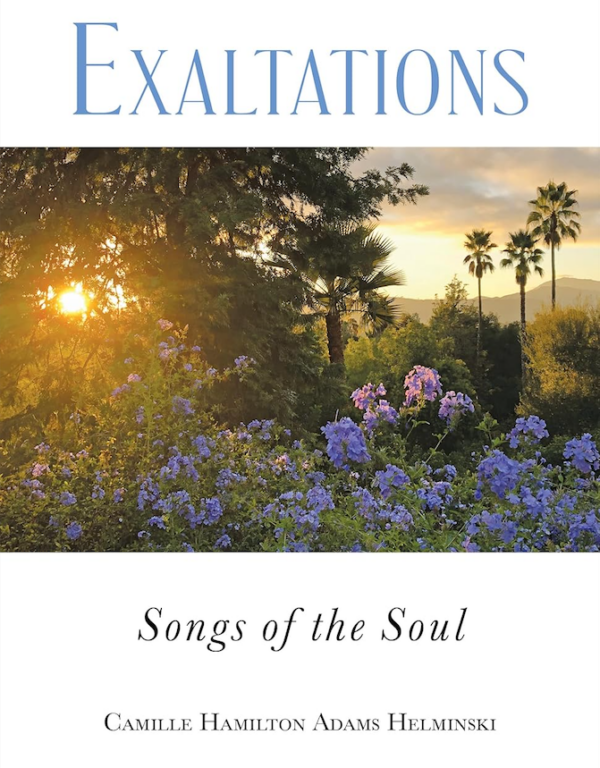
We encourage you to share this book with those near and far,
striving to increase love and understanding between hearts, with God’s Grace.
Available on Amazon
Also available in Arabic from Kalimat Group
Bless our beloved companion Camille for bringing together these wondrous, deeply moving, and inspiring accounts of the Blessed Virgin as recorded by the People of the Book. Muslims regard her as the highest woman of all Creation and as an example of how to BE for men and women alike. Through her gentle and beautiful prose and poetry, Camille—who herself radiates the Marian presence—has conveyed a special guidance to us all by fleshing out our knowledge of Blessed Mary in this exquisitely illustrated and precious volume. Truly a treasure!!
~ VIRGINIA GRAY HENRY, Director, Fons Vitae Publishing
~ Excerpt from The Way of Mary: Maryam, Beloved of God :
Beloved Mary grew up in the Temple, with luminous grace; another of the meanings of “Mary” is “illuminator.” In her turning inward, in service and in prayer, through her mother’s consecration (muharrar) of her dear being to God, she was emancipated within Truth (al-Haqq). As Jafar as-Sadiq described: “[Muharrar means] in emancipation from the bondage of the world (dunya) and its people. [It] means, I have vowed to You what is in my womb as a sincere servant (‘abd) to You, not in servitude to any created being [including her own self (nafs)].”
Al-Qushayri, commenting on Mary’s state said: “God (al-Haqq), all glory be to Him in His pre-eminent wisdom, has emancipated this one from the bondage of being preoccupied with all appearances (wujuh) and states (ahwal).”
Both Christian tradition and Islamic tradition describe how Mary would remain for hours in her prayer chamber. Immersed in worship and prayer, even as it is said of the Prophet Muhammad, she would be standing in prayer until her feet were swollen. And as the Prophet Muhammad responded when asked why, she might, also, have answered, “Should I not be a grateful servant?” Among the passages of the Psalms that she might have sung in offering is this one:
Have mercy on me, Lord,
for I call to you all day long. Bring joy to your servant, Lord,
for I put my trust in you.
You, Lord, are forgiving and good,
abounding in love to all who call to you.
[Bible (NIV), Psalms 86:3–5]
When Zachariah would visit her in her sanctuary, he would find her already provided with food—food of a surprising kind:
Whenever Zachariah visited her in the sanctuary,
he found her provided with food.
He would ask, “O Mary, from where did this come to you?”
She would answer: “It is from God;
see how God grants sustenance to whom He/She wills,
beyond all reckoning.”
[Quran, Surah al-‘Imran 3:37]
We cannot be reminded of this too often. This passage of the Quran is often seen inscribed over the mihrab (the prayer niche indicating the direction toward which one turns for the ritual prayer) in many mosques. This ayat (verse or “sign”) regarding Beloved Mary reminds us of her deep receptivity within the sanctuary, some time before the visit of the Angel Gabriel. Blessed Mary, in her complete immersion in prayer, is such an example for us of one who was profoundly receptive to Spirit, awaiting the arrival of the sustaining gifts of her Lord in every moment.
As the Quran reminds us, sustenance is pouring towards us from our Sustainer; truly, in worship is our sustenance!
Yet go on reminding: for reminding benefits the faithful.
And I have created the invisible beings and human beings only that they may worship Me.
No sustenance do I require of them
nor do I require that they should feed Me.
For God is the Giver of All Sustenance,
the Lord of All Power, the Eternally Steadfast.
[Quran, Surah adh-Dhariya t 51:55–58]
~
Camille Hamilton Adams Helminski’s book The Way of Mary is a beautifully written and researched account of a holy woman of significance to the three Abrahamic religions. She artfully weaves together accounts of Mary’s life from the Christian and Islamic traditions. Having been deeply immersed in Hinduism for most of my life, I knew little about Mary. But I feel deeply the importance today of bringing to the fore accounts of the lives and teachings of the female Masters from all traditions. And so through this narrative, I was pleased to meet Mary and learn of her complete devotion to and absorption in the Divine Reality. There are many beautiful metaphors in the book but one of the most touching and relevant today is the account of Mary during the travails of childbirth reaching out to a palm tree for strength. In this mutual exchange, she revives a withered branch and it becomes fruitful, while the tree grants her the strength she needs to endure the pain of childbirth. How appropriate this metaphor is for us today, as we seek to birth a new, ecological and dharmic civilization. It is perhaps our battered nature that can give us the strength and wisdom we need for this endeavor.
~ DENA MERRIAM, Founder & Convener, The Global Peace Initiative of Women;
author, The Untold Story of Sita
With her signature blend of sublime wisdom and grounded scholarship, Helminski offers a penetrating and life-giving transmission of Maryam as guide to the awakening of the soul, during a time when we need her most.
~ MIRABAI STARR |