|
THRESHOLD SOCIETY NEWSLETTER ~ MAY 2026
|
| |
|
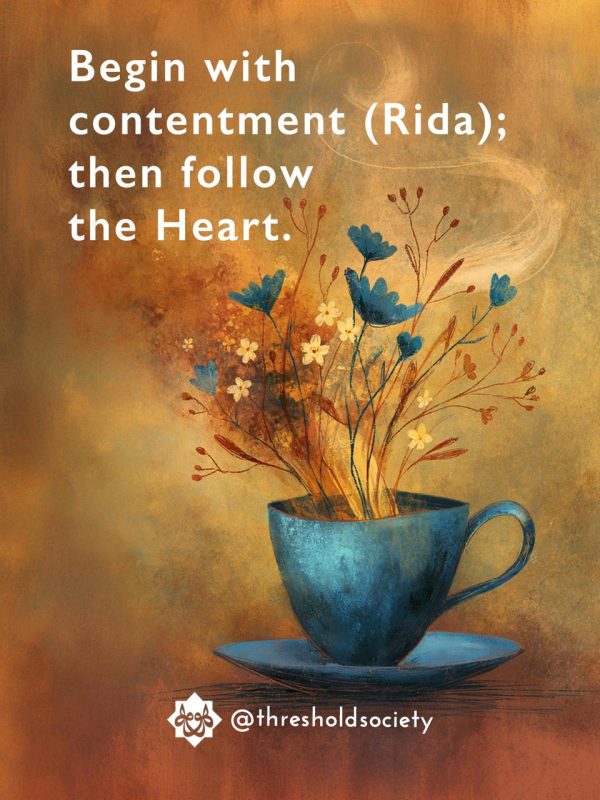
May theme: Begin with contentment (Rida); then follow the Heart.
~Shaikh Kabir
We welcome your reflections on this theme. |
| |
|
"A Moment with Hazrati Shams"
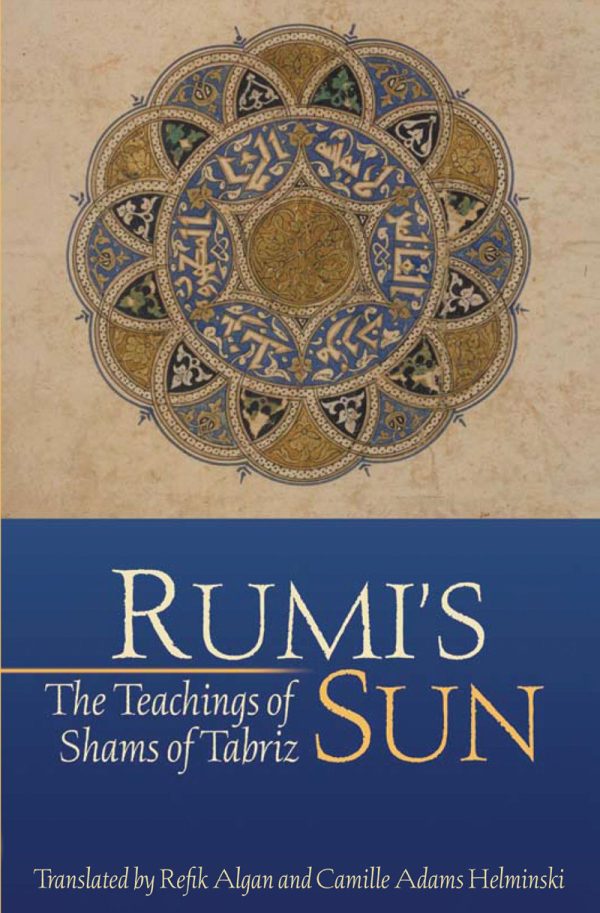
Excerpt from Rumi’s Sun for inspiration and companionship:
|
| |
There is no doubt that this world and the next world are like two sisters who don’t get along. There is no sisterhood left in the world, she changed her state. When that sisterhood is only outward, no real sisterhood remains—the connection is severed.
Again, it was said, “People are asleep; when they die, they wake up.” Following Muhammad is really called following him if you also follow him in making the mir‘aj. Work and persevere, worship, do good to others, and strive so that you may establish an abode in the heart. If you want the world, you’ll be at a loss—you’ll look for its reasons and causes and not discover anything. Worship, look for the Truth, and set out on the way by serving the people of God! Seek God through serving them.
Take as your companion one who is more advanced,
So that your situation might improve.
|
| |
|
The Qur'an
English translation by Camille Adams Helminski |
| |
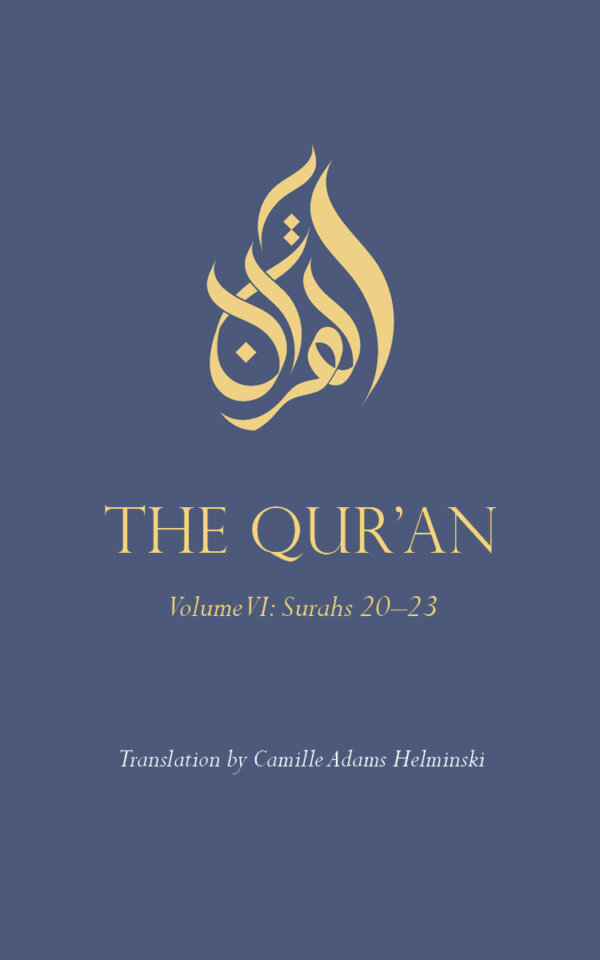
Now available: Volumes I, V, VI and XI
|
| |
|
Among the volumes now available, Volume VI of the Qur’an, contains Surah TaHa, Surah al-Hajj (“the Pilgrimage”), Surah al-Anbiya (“the Prophets”), and Surah al-Mu’minun (“the Faithful”), offering moments of strong support and clarification of our purpose, continued guidance as to how to realign with the Source of our being. |
| |
|
And I unfurled upon you Love from Me [wa alqaytu ‘alayka mahabbatan minnee]—so that you might be brought up under My Eye (in touch with the spring of My Love).
For I have brought you up for (service and intimacy with) My Self. [Wa astan‘atuka li-Nafsi.] Go forth, you and your brother, with My Communications [bi Ayaati], and never let go of remembering Me [wa la taniya fi zhikri]. Go to Pharaoh, both of you, for truly, he has transgressed (beyond the bounds of what is right). But speak gently to him, so that perhaps he might remember, or come into awe.
For one who comes to Hu as a faithful person, having done deeds of wholeness and reconciliation—for them are exalted stations, Gardens of Eternal Bliss, beneath which running waters flow: they will dwell there—that shall be the recompense for all those who purify themselves.
[Surah Ta Ha, 20:39; 41-44; 75-76] |
| |
|
Spiritual conversation (sohbet) on Al-Fatiha with Shazreh Hussain on 03/05/26
“The Bismillah can then be seen as a declaration of love. We are created and sustained by unconditional love, mercy and compassion. And, in a sense, all the other Divine Attributes, even those of stringency such as Qahaar, Jabbar, Muntaqim are different aspects of love. When we say the Bismillah with this awareness, our hearts expand, our horizon expands and our gaze is now fixed on Allah, on love, on mercy, on compassion, on Haqq and the Being who is in reality All-Powerful. So, when we see the darkness that we are witnessing in this world through the lens of the Bismillah we can experience an inner peace even as we continue to experience the heartbreak for the suffering around us. The emotions of anger, of fear, of anxiety may arise but we are not overwhelmed by them. We acknowledge them and we let them dissolve in Allah’s limitless light and compassion. We know that the forces of darkness will perish. We know that the power that they have is ultimately an illusion. We then see this darkness against this backdrop of infinite Nur, infinite Rahman, infinite Love. When we look through the lens of the Bismillah not only does the darkness lose its power to overwhelm us but points of light begin to emerge from the darkness, in the darkness. In Gaza, have we not witnessed the manifestations of love, have we not witnessed that incredible resilience, compassion, courage and generosity shown by the people of Gaza? Have we not witnessed people from all over the world go beyond their nationalities, their identity, their religion and rise up to support the people of Gaza, often paying a heavy price for it? In Iran and for Iran, we will surely witness the same. And if you look beyond the places of war and darkness, love and compassion don’t make the headlines but it is everywhere—in the world of animals, the world of plants, the world of humans. The world would have perished if it were not so. The Bismillah tells us to fill our hearts with love and compassion. We strive for justice, we oppose oppression, but we do not allow hatred to enter our hearts.” |
| |
|
Reflection on April’s theme:
The most helpful thing for reforming the ego is contentment (qana’a). ~ Imam Ali
|
| |
|
This month featuring reflections from Ismail, Darrin and Stuart. |
| |
|
~ Ismail Guler [Minnesota, USA]
What a blessing it is to reflect on the monthly themes of the Threshold Society newsletters. Whether a particular theme immediately touches our hearts, or we simply find ourselves invited to reflect on it, I believe neither is random. Remedy finds the needy. For those of us traveling the Path, these themes offer both guidance and medicine. This month’s theme is no exception.
In Living Presence, Kabir Dede defines contentment as “an awareness of one’s present richness, without precluding having more.” This definition reminds this poor one of the Sufi saying, “Contentment is an inexhaustible treasure.” When we are content, our hearts are rich and no longer enslaved by the endless appetite for more. When this richness is not recognized, the desire to have more or to achieve more can easily become the focus of our lives. Our Sustainer points to such souls in the Qur’an:
Have you seen [O Prophet] the one who has taken their own desires as their god? Would you then be held responsible for them?
[Qur’an 25:43]
And the prayer of our beloved Prophet, peace and blessings be upon him, sounds like a direct response to this condition: “My God, You are my Goal and Your good pleasure is my aim.”
Is not God enough for His servant?
[Qur’an 39:36]
Contentment is the richness of a heart that has realized that God is the Hidden Treasure (Kenz-i Mahfi) and that He alone is sufficient for the servant (Allah bes), and that all else are passing whims and desires (baki heves).
Our beloved Prophet said:
True wealth is not the abundance of possessions, but the richness of the heart.
[Bukhari 6446]
What Imam Ali refers to in this month’s theme is the importance of contentment in reforming and enriching the heart, a transformation, a journey from the self (ego) to the Spirit.
In The Road to Mecca (pp. 308–310, The Book Foundation), Muhammad Asad recounts a moment from 1926, when he was traveling with his wife, Elsa (Aziza), on the Berlin subway. He noticed the unhappy, anxious faces of the well-dressed men and women sharing their upper-class compartment. When he pointed this out, Elsa looked around and responded with astonishment: “You are right. They all look as though they were suffering torments of hell… I wonder, do they know themselves what is going on in them?”
When they returned home, Asad noticed the following verses from a copy of the Qur’an lying open on his desk:
You are obsessed by greed for more and more
Until you go down to your graves.
Nay, but you will come to know!
Nay, but you will come to know!
Nay, if you but knew it with the knowledge of certainty,
You would indeed see the hell you are in.
In time, indeed, you shall see it with the eye of certainty:
And on that Day you will be asked what you have done with the boon of life.
[Qur’an 102:1-8]
I, too, occasionally get awakened from this self-inflicted torment by members of my family, who lovingly catch me in my heedlessness. But many other times, I am simply left to it. Contentment is often the fruit of spiritual wakefulness (yakaza). A heart that is aware (agah), present (hazir), witnessing (nazir), and in remembrance (zikir) is also a content heart.
For, truly, in the remembrance of God hearts find contentment.
[Qur’an 13:28]
And again:
O content soul! Return to your Sustainer, well pleased [with Him] and well pleasing [to Him]. So, enter among My servants, and enter My Garden.
[Qur’an 89:27-30]
Contentment reforms the soul, while discontent deforms it. Contentment moves us from hell to the Garden, here and now, in this earthly life. Contentment leads us toward freedom, whereas discontent binds us in slavery.
Kabir Dede defines a dervish as a seeker who stands at the threshold between slavery and freedom. We often cross that threshold through contentment.
When a dervish steps over the threshold into a Sufi tekke, he leaves the “world” (dunya) and its concerns behind. He never steps on the threshold, but over it. The tekke is the school of love.
[Kabir Dede, The Knowing Heart]
Many of us, scattered across the world, do not have access to a physical tekke. Yet Dede reminds us that the heart of the dervish is itself an inner tekke, a threshold between the two worlds, seen and unseen. In that inner space, the education of love continues.
Hz. Yunus Emre says, “When Love arrives, all that is incomplete becomes complete.” In Sufi circles, this is often followed by a subtle but beautiful clarification: “The incompleteness of things never ends, but God no longer shows them to you as incomplete.” This is a state of contentment, a shift in perception (idrak) bestowed by our Sustainer upon the heart.
Our beloved Prophet has also said, “Poverty is my pride” (el-fakru fahri). His heart, rich in love and fulfilled through dependence on the Beloved, is poor only in worldly desires, ambitions, and possessions.
Poverty is my pride, poverty is my pride;
Didn’t he say, the pride of all worlds?
Remember your poverty, remember your poverty;
In effacement and dying to self (mahv u fena), this heart of mine found it.
[Hz. Haci Bayram-i Veli, Bir Ulu Pir, Tatci]
We are truly grateful for the continuation of the Mysterion School in 2026, focusing on “The Art of Spiritual Practice: The Way of the Dervish in Everyday Life.” For the first practice, Dede guided us to breathe in contentment at least five times a day. Reforming the lower self through contentment, stepping over the threshold (berzah) one conscious breath at a time!
Ismail is a seeker on the Sufi Path of Love, striving to “remain conscious of the Beloved, and be among those who are true to their word” (Qur’an 9:119).
|
| |
|
Second Reflection on April’s theme:
The most helpful thing for reforming the ego is contentment (qana’a). ~ Imam Ali
|
| |
|
~ Darrin Schultz [SF Bay Area, California]
Rida as acceptance carries within it a deep contentment. You can live simply, want less, be content with what you have, and still resist what’s happening in your life. Rida does not require resolution. It does not depend on circumstances aligning. Rida begins when all else is exhausted and one surrenders to what is.
It is the acceptance of what is present, not as an idea, but as a lived condition. Not passive resignation, not emotional numbness, but a clear alignment with reality as it stands. The mistake is to think that contentment means the absence of longing. In truth, rida can exist fully in the presence of longing, even deep and unfulfilled longing. We carry within us a sincere capacity to give, to love, to serve, and yet the world may offer no immediate receiver. This creates a particular kind of ache; a sense of absence. It is the feeling of an open current with no circuit to complete it. Rida keeps the impulse to give alive, but removes the need for a circuit.
This is where rida lives. Contentment with no need of fulfillment. The longing is not denied. The pain of isolation is not erased. Both are included. One stands within the tension without trying to resolve it. There is an ache in it, and a clarity. Things are seen as they are, without distortion. To accept what is, without turning away.
This acceptance is not soft. It has friction. It rubs against expectation, against desire, against the narratives one has carried about how life should unfold. That friction is often experienced as pain. Yet this pain is not an error. It is part of the refinement. As Mevlana Jalaluddin suggests, one who wishes to polish the heart must accept the rubbing. The dervish does not seek pain, but does not reject it when it comes. It becomes part of the turning, part of the path itself. Rida, then, is not the absence of struggle, but the absence of resistance to what has already arrived. It is the willingness to remain open even when there is no immediate relief, no visible outcome, no guarantee of fulfillment. Contentment, in this sense, is not a feeling that comes and goes. It is a stance. A quiet, steady alignment with reality, even when reality includes longing, solitude, uncertainty, and pain.
Nothing is forced. Nothing is denied.
It is as it is.
And in that, inner stillness begins to flower.
Darrin is a member of Threshold and works as a RN in the SF Bay Area. |
| |
|
Third Reflection on April’s theme:
The most helpful thing for reforming the ego is contentment (qana’a). ~ Imam Ali
|
| |
|
~ Stuart Kemp [Scotland]
We have all experienced periods of contentment—those moments when life seems to fall into place, when the various factors affecting our lives appear to align. The difficulty, of course, is that these factors are in constant flux, and inevitably they shift once more, allowing discontent to reclaim its familiar position at the centre of our experience.
This suggests that what we commonly call contentment is dependent upon circumstances, measured against an inner scale that judges the degree of favourability of the present moment— I dislike this, I am indifferent to that, I love this—with our experience of contentment rising or falling according to where the moment lands on this scale of approval.
We often think it is circumstances themselves that unsettle us, when in truth it is how they appear to us that gives rise to discomfort—in other words, our conditioned response to them. What troubles us is not life as it actually is, but life as filtered through judgement based on a false idea of reality. As Ibn ʿArabi observes, “Nothing disturbs the heart except its belief that things should be other than they are” (al Futūḥāt al Makkiyya).
Here the Sufi quality of rida, acceptance of what is given, shows itself gently in the heart.
When circumstances are perceived as unfavourable, we instinctively resist; our conditioning leads us to say No to what is. Such resistance is a clear sign that we are responding from the nafs, and it offers an opportunity to practise acceptance, as Junayd of Baghdad expressed it, “The servant reaches contentment when he no longer objects within himself” (Abū Naṣr al Sarrāj, Kitab al Luma‘, on rida.) Yet even a reflexive Yes—when circumstances happen to align with our preferences—may equally be the nafs at work. Agreement and resistance both arise in some degree from judgment.
True acceptance, then, belongs to a different order altogether. It does not depend upon approval or rejection, but arises only when our conditioning has been able to be set aside.
This quality of rida, a fruit of tawakkul (‘trust’), can be cultivated through the practice of muraqaba in which we sit quietly, resting our attention in the heart, aware of divine nearness and presence. It is a practice of receptivity, not of petition—knowing that even if we do not see, we are seen: He is with you wherever you are (Qur’an 57:4).
Through this, a realisation dawns: there is only one true power, and circumstances hold sway over us only to the extent that we grant them authority in the heart.
In this lies true contentment—not something at the mercy of the whims of the nafs, but a state rooted in reality, enduring only inasmuch as we are able to abide in presence, whatever the circumstances we find ourselves in.
“When the heart is present with God,” al Ghazālī reminds us, “what befalls it does not unsettle it” (Ihya’ ‘Ulum al Din, on presence of heart and tranquillity).
After more than forty years devoted to the transformation of the heart, Stuart took hand with Shaikh Kabir in 2022—yet still experiences the work as perpetually at its beginning. |
| |
|
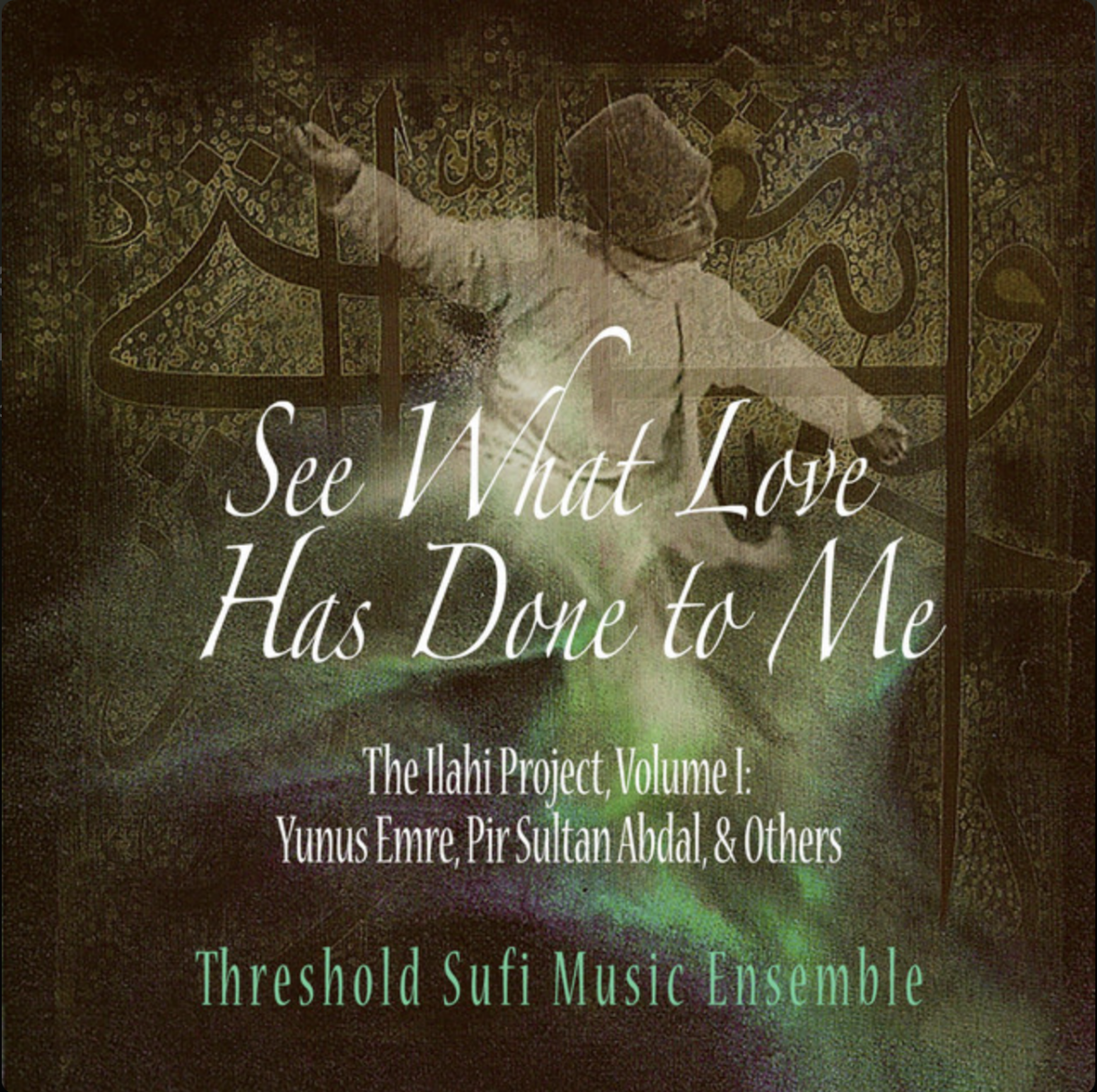
See What Love Has Done to Me:
An Album from Threshold Sufi Music Ensemble.
|
| |
|
We are happy to offer The Threshold Sufi Music Ensemble and The Ilahi Project. This album, "See What Love Has Done to Me," recorded this past June in Istanbul under the direction of Shaikh Kabir and Selçuk Gürez, celebrates the living tradition of Sufi “tekke” music. |
| |
|
You can also view and download the companion booklet, below, which includes the full Turkish texts and English translations of all the ilahis. |
| |
|
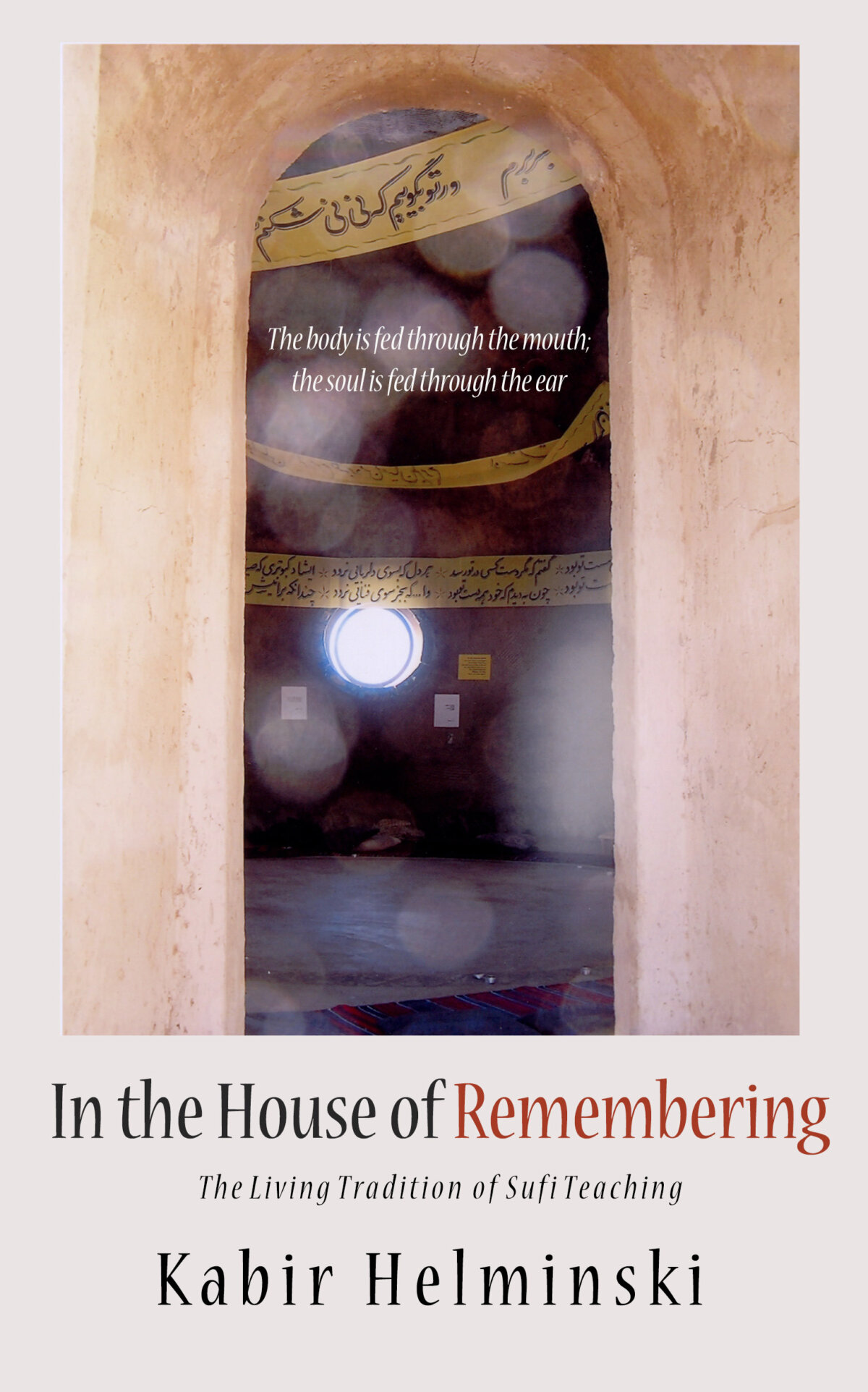
In the House of Remembering
|
| |
The Living Tradition of Sufi Teaching
By Kabir Helminski
Introduction by Mahmoud Mostafa
|
| |
The chapters of this book are transcriptions of talks and dialogs from within a private circle of spiritual practitioners. This collection explores subjects such as developing intention, will, awareness, awakening our capacities for love, reducing the domination of ego, honoring the masters, saints, and prophets that have gone before. As the saying goes, “The body is fed through the mouth; the soul is feed through the ear.”
Available from:
|
| |
|
May 3rd
Join us for a monthly online meditation and sohbet with Shaikh Kabir and special guests from the Threshold community. Held on the 1st Sunday of every month at 12pm Eastern Time (5pm UK).
Zoom meeting: https://zoom.us/j/435138208
Zoom passcode: threshold
Watch last month's meeting below and see all our videos here.
To view in YouTube without interrupting ads, use the Brave browser. |
| |
|
The Threshold Society, rooted within the traditions of Sufism and inspired by the life and work of Mevlâna Jalâluddîn Rumi, is a non-profit educational foundation with the purpose of facilitating the experience of Divine Unity, Love, and Truth in the world. Sufism is a living tradition of human transformation through love and higher consciousness. Our fundamental framework is classical Sufism and the Qur’an as it has been understood over the centuries by the great Sufis. The Society is affiliated with the Mevlevi Order, and offers training programs, seminars and retreats around the world.
You can find our core articles here. We encourage our community to read and reread these regularly.
Each month we intend to highlight an article about our lineage and its principles. This month we offer the Lessons in the School of Love: The Adab of Sacred Space:
Sufi training is accomplished, above all, in the Sufi lodge and the network of relationships cultivated there. Sometimes the Sufi lodge is an actual tekkye or dergah, a private home, a rented hall, and sometimes it may even be a “tekkye on wheels,” as when we travel to a foreign country together. What is most important is the intention and an understanding of why we come together. We are seeking to create and sustain an environment where spiritual realization can be optimized, where the influence of egoism can be minimized, and where the values and knowledge of the tradition can be preserved.
Ideally, every thing within sacred space has meaning and purpose. If we are fortunate enough to have a sacred space that was designed specifically for a sacred purpose, even the proportions of the architecture will be intentional, reflecting the Golden Mean, for instance, or embodying sacred geometry and number in other ways.
Proportion also applies to human relationships. Relationships are more harmonious when we know where we fit, what our place is. In the tekkye relationships were proportioned by reciprocal humility and respect. The beauty of relationships in Sufism is one of the qualities that captured my heart. As a beginner on the path and as a guest, I encountered a quality of respect I had not seen in any other circumstances. In fact I felt that I received more respect than I deserved.
[Read more...] |
| |
1st Sunday of every month: Online Meditation, more details.
Friday evening August 14 through Monday noon August 17: 2026 UK Annual Retreat, more details soon.
Friday October 9 to Sunday 11th: retreat, Madison, Wisconsin, led by Khadim Chishti, more details to follow soon.
|
| |
Threshold Society
PO Box 45143, Madison, WI 53744-5143
© Threshold Society. All rights reserved.
| |
|