|
THRESHOLD SOCIETY NEWSLETTER ~ JUL 2026
|
| |
|
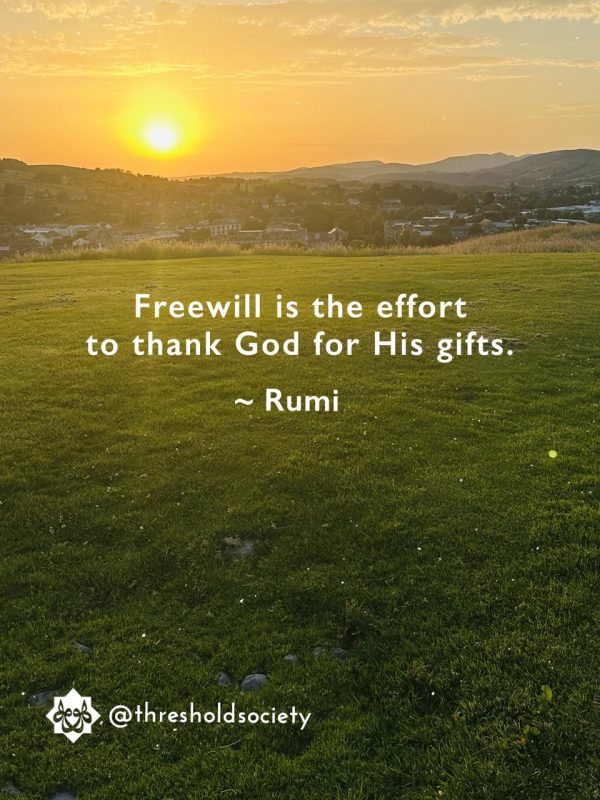
July theme: Freewll is the effort to thank God for His gifts.
~Rumi
We welcome your reflections on this theme. |
| |
|
Bismillah arRahman arRahim
|
| |
|
O humankind! You are the ones in need of Allah!
|
| |
|
O humankind! You are the ones in need of Allah [Ya ayuha an-nas! Antum al-fuqara’u ila Allahi]. And He is the One Who Is Rich Without Need, the One Worthy of Praise [Wa Allah Huwa al-Ghani, al-Hamid.] . . .
Don’t you see how God sends down rain from the sky? With it We then produce fruits of many colors. And in the mountains are areas that are white, and red, of various shades, and black intense in hue.
Even so among human beings, and wild creatures, and tended cattle are those of various colors (and inclinations). Those among His servants who have knowledge [al-‘ulama] stand in awe of God: for God is Magnificently Mighty and Intimately Dear, Often-Forgiving [inna Allaha ‘Azizun Ghafur].
Those who meditate upon the Book of God and are constant in prayer, and distribute out of what We have provided for them, secretly and openly, look forward to a bargain that cannot fail—
for He will pay them their due, no, He will gift them even more out of His abundance of Grace; for He is Often-Forgiving, Always Responsive to Gratitude [inna-Hu Ghafurun Shakur].
And that which We have inspired in you of the Book, it is the Truth [al-Haqq], confirming that which was before it. Truly, of Its servants, Divine Reality is All-Aware, Seeing [Khabir, Basir (of their actions and their hearts)].
[Surah Fatir 35:15;27-31]
~ Excerpt from the forthcoming The Qur’an, Volume VIII. |
| |
|
Threshold UK Retreat
August 14-17, 2026
|
| |
|
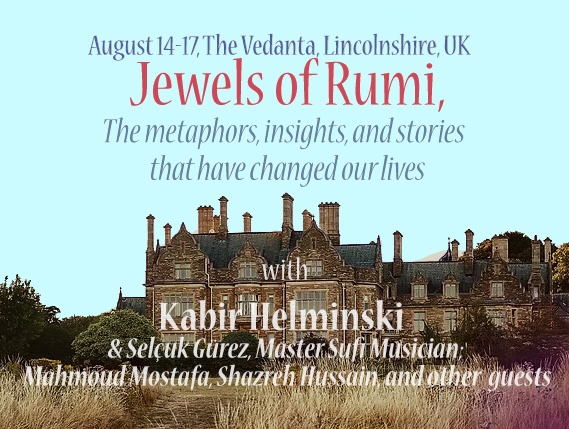
Jewels of Rumi
The metaphors, insights, and stories that have changed our lives
|
| |
|
A retreat with Kabir Helminski, Selçuk Gürez, master Mevlevi musician; Mahmoud Mostafa & Shazreh Hussain
August 14-17 2026, The Vedanta, Lincolnshire, UK
Join us for a balanced program of meditation, zikr, music, movement, discourse, and friendship, centered upon our the theme:
“Jewels of Remembrance.”
|
| |
|
Stories of the Grandmothers
|
| |
|
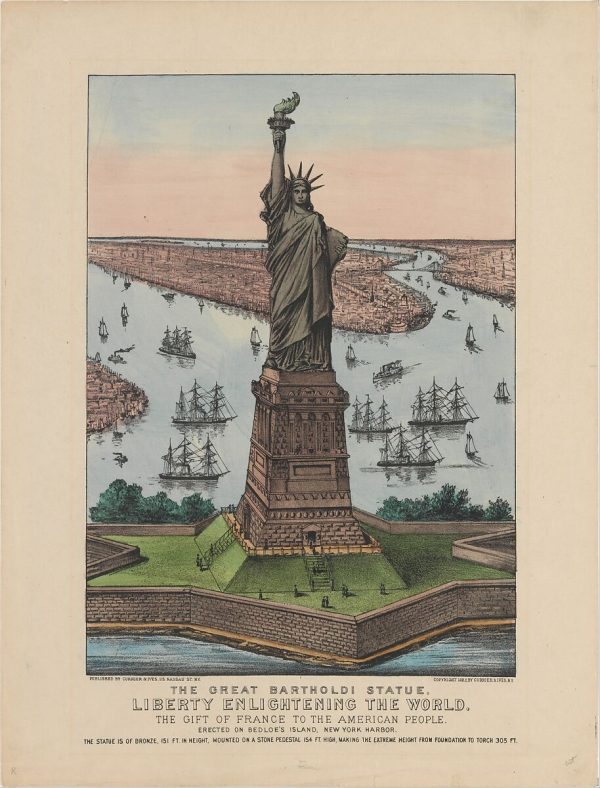
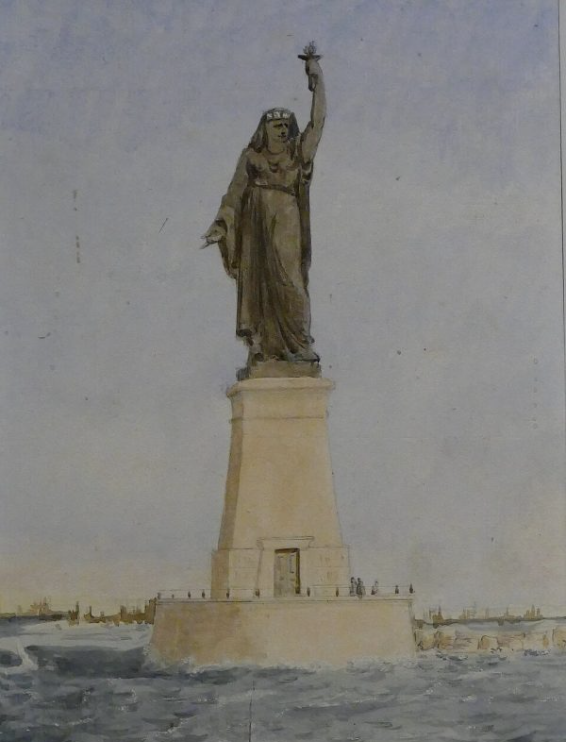
Many in the United States of America do not know that the Statue of Liberty, crafted by the French artist, Frédéric Auguste Bartholdi, was originally conceived as an Egyptian Muslim maiden raising a torch of freedom, intended to light the entrance to the new Suez Canal, welcoming travelers into Asia: “Egypt Bringing Light to Asia.” In 1869 when the canal opened at Port Said, not far from Cairo, prayers were offered in both a church and a mosque constructed there near each other for the ceremony. However, because funds for the monument project had vanished—the financially challenged government could not cover the cost of such a huge monument, intended to be twice the height of the Sphinx—plans were canceled. Disconsolate, Bartholdi visited America. When he sailed into New York harbor, past the “egg-shaped” Bedloe’s Island, he reimagined the monument as an idealized Western woman welcoming the poor and oppressed into America. The French government was inspired to pay for the construction of the statue in honor of the end of the U.S. Civil War and the abolition of slavery, and America covered the cost of the foundation. “Liberty Enlightening the World” was completed in 1886, about 100 years after the birthing of America.
As we revisit the moments of the founding of our country in honor of the approaching 250th anniversary, we share here some stories of grandmothers who participated in the efforts toward the freedom of the United States of America, and the spirit of freedom of religion that was intrinsic to it, which we continually are pressed to reaffirm.
Further reading
Read: [Catherine Cumming Stockton and Annis Boudinot Stockton]
Read: [Stories of the Grandmothers]
~
Excerpts from the forthcoming book,
Tree of Grace: Troubadors, Patriots, Mystics and Lovers
~ by Camille Hamilton Adams Helminski |
| |
|
Images:
Currier & Ives, The Great Bartholdi Statue – Liberty Enlightening the World, 1885. The Metropolitan Museum of Art, public domain.
Auguste Bartholdi, Project for a Monumental Statue at the Entrance of the Port of Suez, watercolor, 1869. Musée Bartholdi, Colmar / Wikimedia Commons, public domain. |
| |
|
Everyone knows the story of that scholar who taught the Qur’an—he used to teach seven kinds of recitation. He asked one gold coin for each verse. This was the contract he made with his students. His motto was: "Forms are many, but meaning is one."
For sixteen years, I have kept the parable that I learned from my master as a remembrance: he said, "People are like a cluster of grapes. From the point of view of form, the grapes are numerous. But if we squeeze this cluster into a cup, no trace of number remains." Put these words to use.
No other sight can kill the cluster of the desires of the commanding self, nafs al-ammarah, as well as its witnessing of the beauty within the universe of the heart. When it sees the universe of God’s beauty, it immediately weakens.
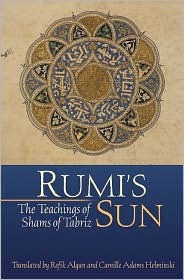
~ Rumi’s Sun: the Teachings of Shams of Tabriz, p.127 |
| |
|
The Qur'an
English translation by Camille Adams Helminski |
| |
Now available: Volumes I, V, VI and XI
|
| |
|
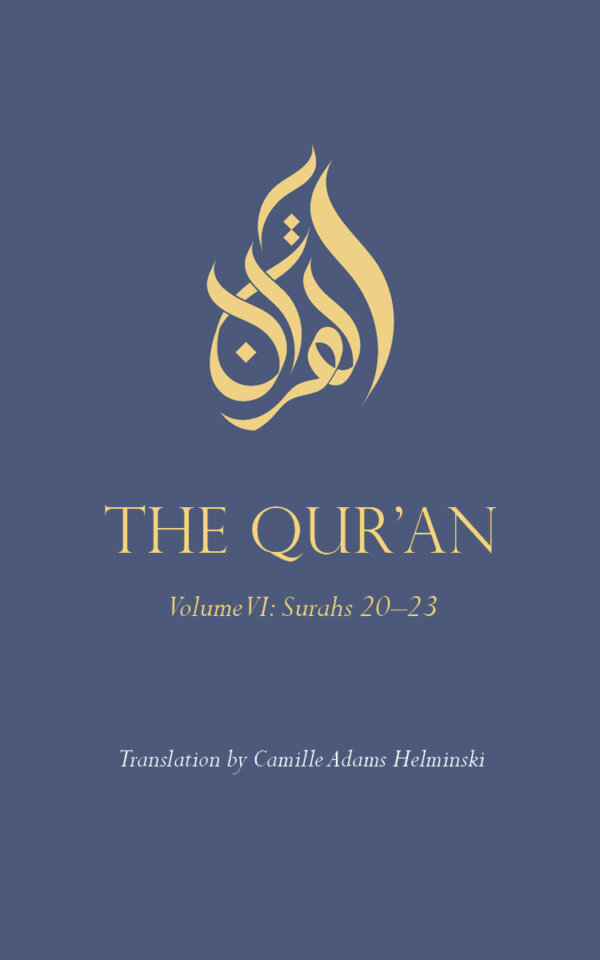
Among the volumes now available, Volume VI of the Qur’an, contains Surah TaHa, Surah al-Hajj (“the Pilgrimage”), Surah al-Anbiya (“the Prophets”), and Surah al-Mu’minun (“the Faithful”), offering moments of strong support and clarification of our purpose, continued guidance as to how to realign with the Source of our being. |
| |
|
And I unfurled upon you Love from Me [wa alqaytu ‘alayka mahabbatan minnee]—so that you might be brought up under My Eye (in touch with the spring of My Love).
For I have brought you up for (service and intimacy with) My Self. [Wa astan‘atuka li-Nafsi.] Go forth, you and your brother, with My Communications [bi Ayaati], and never let go of remembering Me [wa la taniya fi zhikri]. Go to Pharaoh, both of you, for truly, he has transgressed (beyond the bounds of what is right). But speak gently to him, so that perhaps he might remember, or come into awe.
For one who comes to Hu as a faithful person, having done deeds of wholeness and reconciliation—for them are exalted stations, Gardens of Eternal Bliss, beneath which running waters flow: they will dwell there—that shall be the recompense for all those who purify themselves.
[Surah Ta Ha, 20:39; 41-44; 75-76] |
| |
|
Enlightenment, Happiness, and Peace
|
| |
|
Spiritual conversation (sohbet) with Shaikh Kabir and Camille Helminski on 11/05/14
~
“If enlightenment means escape from this world or being finished with this world, maybe that should be questioned because—do we have a purpose? I can speak better on the Sufi point of view [regarding enlightenment]. The Sufi point of view is that there’s a reason why we are here embodied and the reason is not to escape it, dismiss it, deny it. The reason is to find the Presence of God and the Tender Mercy of God in every detail of life. And, to try to speak about and talk about what the highest states in Sufism are—I would say that it is something like this: We say the purified heart (the heart is a cognitive knowing instrument), the heart when it is purified, receives guidance directly from Divine Intelligence and is able to respond— to act, to move, to communicate with an almost immediate flow from the Divine into the present. In this model, we might say, ego is nothing but an obstructing factor, ego does nothing but get in the way. It doesn’t really serve much of a purpose. When I say ego, I mean the false self construct, egoism. I don’t mean “I-ness” itself. Our “I-ness” itself can also be a reflection of the Divine. The “I-ness” can be like the lense that focuses the Light of the Divine. That would be a nice kind of “I” to have.
Let’s clarify. We do say that on the Sufi journey, the human being comes to a state of merging with the Divine, in a state of ecstasy and One-ness, intoxicating Oneness where the “I” seems to disappear. But we emerge from that state without necessarily that drunkenness but with a sobriety that is wider, bigger, more comprehensive than that internal bliss and ecstasy. But the bliss and ecstasy, they don’t vanish, they’re not denied, but you come into a state of more mature sobriety. And when you come into that state of more mature sobriety, there are issues, there are responsibilities in terms of how we live in the world that cannot be denied. And, first of all, law as expressed in the Quran—there are specific behavioral things that are offered and that’s a big subject, not one to get into much detail right now, but when all the principles are all understood together and put in their proper hierarchy, we understand that the highest values are human love, human dignity and social justice. Within that hierarchy of priorities, then the details of life and how we transact in the economy, how we care for the environment and how we apply law, all those things are guided by those spiritual principles. Now what I think is really special about the Islamic Sufi framework is the degree of its integration with that higher consciousness—how it integrates that higher consciousness with the intimate details of life." |
| |
|
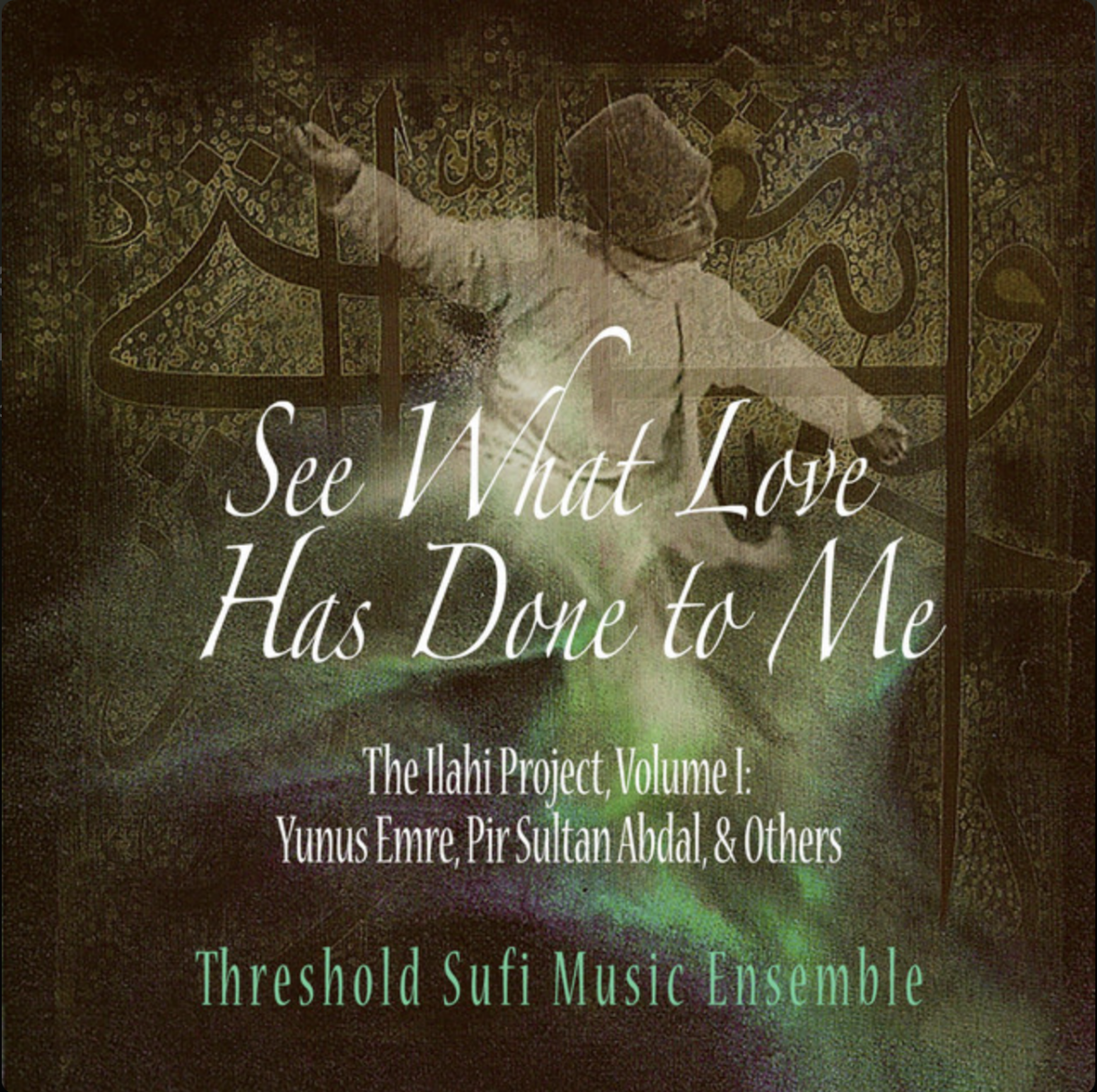
See What Love Has Done to Me:
An Album from Threshold Sufi Music Ensemble.
|
| |
|
We are happy to offer The Threshold Sufi Music Ensemble and The Ilahi Project. This album, "See What Love Has Done to Me," recorded this past June in Istanbul under the direction of Shaikh Kabir and Selçuk Gürez, celebrates the living tradition of Sufi “tekke” music. |
| |
|
You can also view and download the companion booklet, below, which includes the full Turkish texts and English translations of all the ilahis. |
| |
|
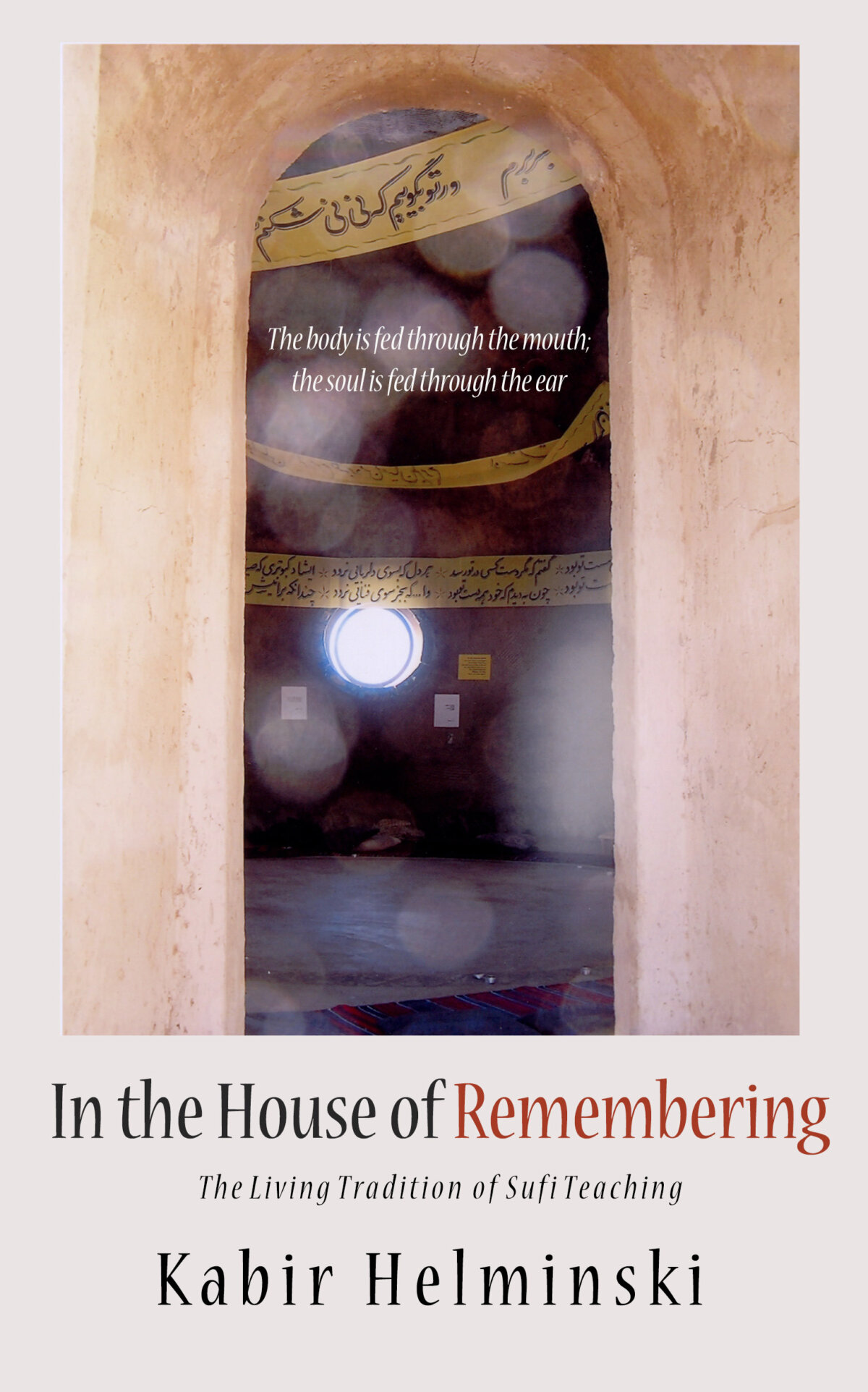
In the House of Remembering
|
| |
The Living Tradition of Sufi Teaching
By Kabir Helminski
Introduction by Mahmoud Mostafa
|
| |
The chapters of this book are transcriptions of talks and dialogs from within a private circle of spiritual practitioners. This collection explores subjects such as developing intention, will, awareness, awakening our capacities for love, reducing the domination of ego, honoring the masters, saints, and prophets that have gone before. As the saying goes, “The body is fed through the mouth; the soul is feed through the ear.”
Available from:
|
| |
|
July 5th
Join us for a monthly online meditation and sohbet with Shaikh Kabir and special guests from the Threshold community. Held on the 1st Sunday of every month at 12pm Eastern Time (5pm UK).
Zoom meeting: https://zoom.us/j/435138208
Zoom passcode: threshold
Watch last month's meeting below and see all our videos here.
To view in YouTube without interrupting ads, use the Brave browser. |
| |
|
The Threshold Society, rooted within the traditions of Sufism and inspired by the life and work of Mevlâna Jalâluddîn Rumi, is a non-profit educational foundation with the purpose of facilitating the experience of Divine Unity, Love, and Truth in the world. Sufism is a living tradition of human transformation through love and higher consciousness. Our fundamental framework is classical Sufism and the Qur’an as it has been understood over the centuries by the great Sufis. The Society is affiliated with the Mevlevi Order, and offers training programs, seminars and retreats around the world.
You can find our core articles here. We encourage our community to read and reread these regularly.
Each month we intend to highlight an article about our lineage and its principles. This month we offer the Love in Islam
By Mahmoud Mostafa
A man once came to the Prophet (puh) and asked him about the hereafter. The Prophet asked him, “And what have you prepared for that time?” The man replied, “Nothing, except that I love Allah and I love you.” The Prophet (puh) answered him, “You are with the ones you love.”
Dear brothers and sisters, the guidance of Islam is the guidance of love. The innate, natural and ancient religion that is Islam is the religion of love. The Prophet (puh) came to guide us to love and to make clear the love that is at the core of all religion. Our purpose as human beings is to consciously manifest Allah’s love in our lives. This is the most significant meaning of Khilafa and Ibada that can bring purpose to us and transform our lives. When we reflect upon the history of the Prophet (puh) and the spread of his message we will realize that Islam could not have taken root in the world without the love that filled the heart of the Prophet and was clearly manifest in his way of relating and interacting with people that brought out their own deep and profound love for him. Without this mutual and abiding love, none of us would be here today. Without this love Islam would not have been possible.
[Read more...] |
| |
1st Sunday of every month: Online Meditation, more details.
Friday evening August 14 through Monday noon August 17: 2026 UK Annual Retreat, more details soon.
Friday October 9 to Sunday 11th: retreat, Madison, Wisconsin, led by Khadim Chishti, more details to follow soon.
|
| |
Threshold Society
PO Box 45143, Madison, WI 53744-5143
© Threshold Society. All rights reserved.
| |
|