|
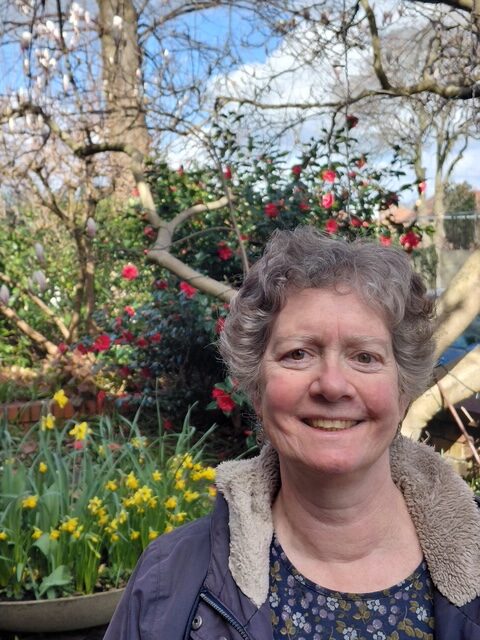
~ Steffie El Hassan [Manchester, UK]
This reflection has become a beautiful gift but has also really challenged me. The theme of striving felt particularly pertinent during Ramadan and I welcomed it. But as soon as I looked at this verse’s Arabic transliteration (Wa jahidu fi Allahi Haqqa jihadihi) I realised it relates to jihad. And the word jihad unleashed an unexpected strong reaction, due to associations with terrorism and extremism. The human decimation from a suicide bombing at a concert here in Manchester several years ago was so horrendous, an action supposedly carried out in the name of Allah. What additionally disturbed me was that I often went to a reverts’ group at the mosque the bomber and his brother were associated with. I remember feeling repulsed and no longer safe there, unable to go again.
But something has shifted for me on that stuck narrative. Just over a year ago there was a terrible flood locally, and that mosque was designated as the emergency hub, offering food, shelter and help. I was able to go then because it didn’t feel about religion but a human-to-human response. And as I now look at this I see, with a smile, the symbolism of that flood, of water and mercy which transformed the mosque, to me at least, from a place associated with terror to a place associated with giving, community, shelter and love. Alhamdulillah.
Feeling freer to explore the meaning of jihad, I remembered the following saying of our beloved Prophet (PBUH) after returning from battle:
“We have come back from the lesser jihad to the greater jihad.” They said, “Is there any greater jihad than jihad against the kufir (denier)?” He said, “Yes, jihad al-nafs (jihad against the self).”
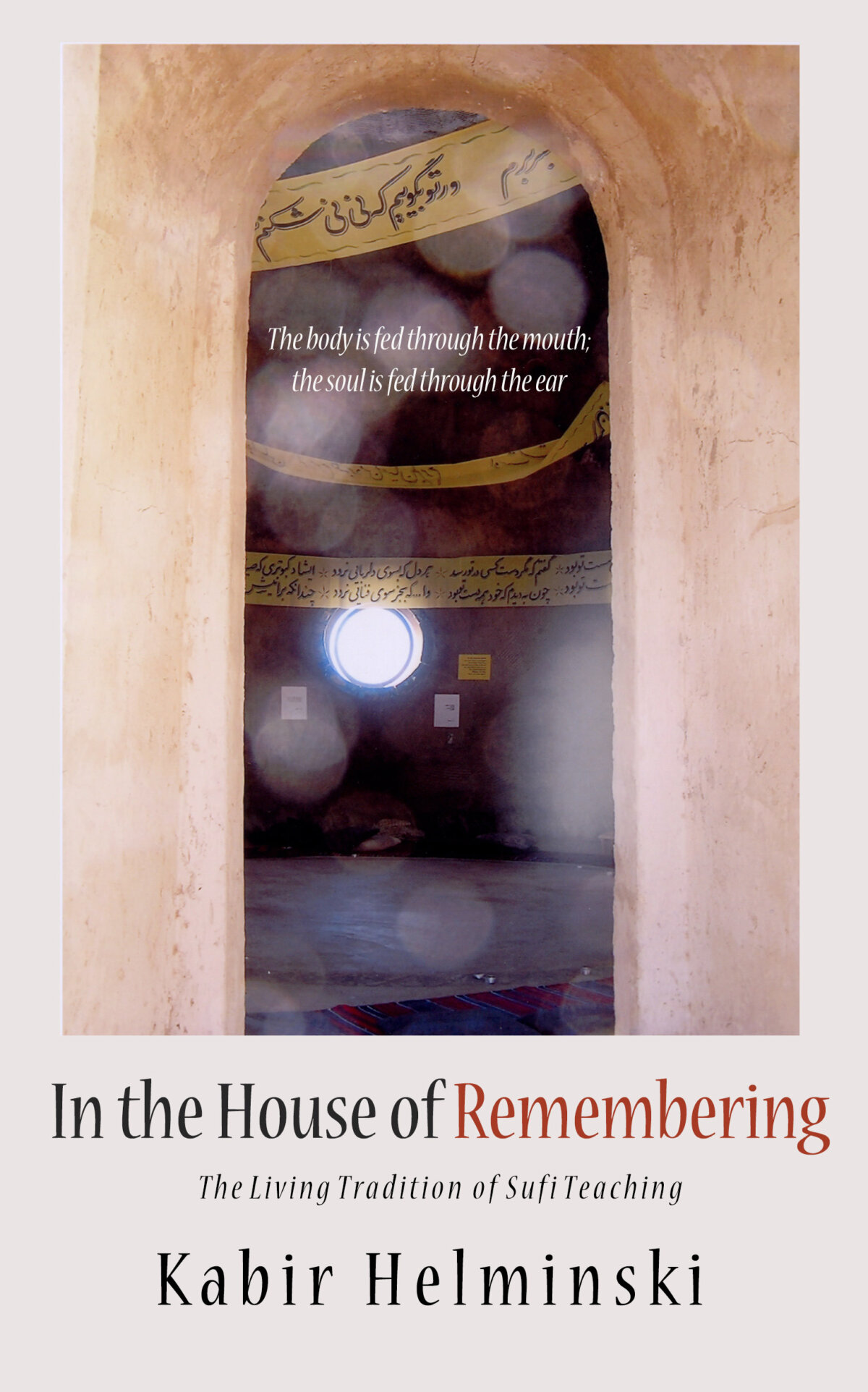
So fighting does lie within the concept of lesser jihad, jihad of the sword, but as practiced by the Prophet (PBUH) was only under strictly defined conditions and always with the hope of making peace. As Kabir Helminski says it is only when the concept of jihad is corrupted by those with an out-of-control nafs that it can become an extremist agenda of power, control and violence ( ‘The Greater Jihad, the Struggle against the Ego’, www.patheos.com). He offers this poem by Rumi:
A self-righteous person sees someone ‘sin,’
and the flames of Hell rise up in him.
He calls his own hellish pride defense of the Religion;
he doesn’t notice his own arrogant soul.
[Mathnawi I, 3347-48]
Kabir summarises the intention of the lesser jihad as ‘the struggle for social justice and peace’, and how can I not align with this? We are asked to strive with our wealth, our tongue/pen and our hands. Each of these areas feel huge in themselves. And in the greater jihad the almost constant struggle with our egos is acknowledged, those demands, preferences, resistances, irritations, emotions. Looking at the root of the Arabic word (j-h-d) in Lane’s Lexicon I find that jihad, striving, means ‘guided to do our utmost, unsparingly, take extraordinary pains to exert ourselves’. This is not casual effort, but the highest, purposeful effort we can make. I reflect and feel I fall short. I think of Abu Lahab, the uncle of the Prophet (PBUH) and staunch opponent of Islam, and see denial of Allah and refusal to strive as his downfall:
Doomed are the hands of the Father of Flames (one who is known for spreading hateful speech)! Lost is he!
His wealth will be of no benefit to him, nor any of his predatory gains.
[The Qur’an, Volume IX, 111:1-2, trans. Camille Helminski]
I sense we all move somewhere on a continuum of striving between Abu Lahab and the Prophet (PBUH). My self-assessment shows I am not doing my utmost in my efforts in terms of the lesser or greater jihad despite feeling deeply committed to this beautiful path. Too many examples come to mind, including the good intentions made at the start of Ramadan that have not been fulfilled.
Then I read:
There are three parts to striving: affirmation/intention, resistance/disappointment, and presence. At first when affirmation meets resistance, the struggle may be frustrating and seem fruitless in some respects. Everything seems to be only a clash of opposites. But with the support of presence, intention can summon Grace.
[‘Endeavor to Make God Your Companion in Every Spiritual State’, Kabir Helminski, www.sufism.org/library]
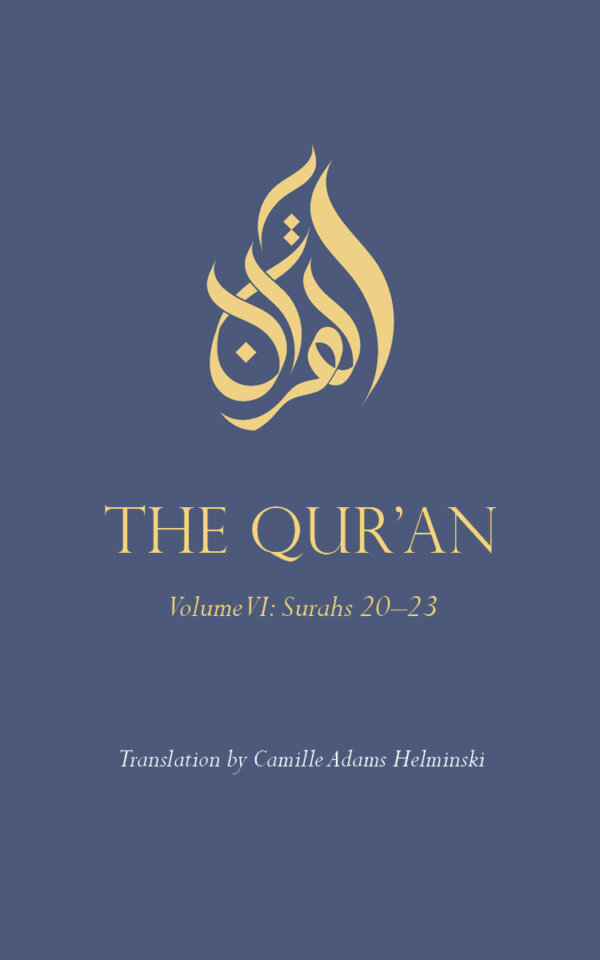
Through my striving and then realising my limitations I have the blessing of returning to Allah with increased remembrance. Reading Camille Helminski’s translation of the original verse (The Qur’an, Volume VI)—‘And strive within God as He (the One), truly, ought to be striven for’—I am struck by the difference in her translation saying ‘striving within’ rather than ‘striving for’. I am reminded not to perceive striving as an action separate from the Divine. Camille connects me with Al Wasi, Allah the All-Encompassing, embracing, assuring me we are integral to the Divine. In awe I see that Allah has carefully created us with the ability and desire to strive and to love for His/Her sake, not because He/She needs it, but to align us. Allah knows we will fall short but gives us the gift of recognising this so that we are brought closer within the Divine Rahma (Mercy):
Every grace that your soul so passionately seeks,
I revealed it to you that you might desire it.
[Rumi, Mathnawi II: 366, trans. Kabir and Camille Helminski]
Lastly, I’d like to share this reminder from A. Helwa in an email from her Mystical Secrets of Ramadan course 2026:
May we all, in whatever state we find ourselves this Ramadan, remember that we do not reach Allah through striving alone. We reach Him by finally letting go enough to receive His Grace!
Steffie is a seeker on the Mevlevi path, and a member of the Manchester UK Threshold group.
|