|
THRESHOLD SOCIETY NEWSLETTER ~ MAR 2026
|
| |
|
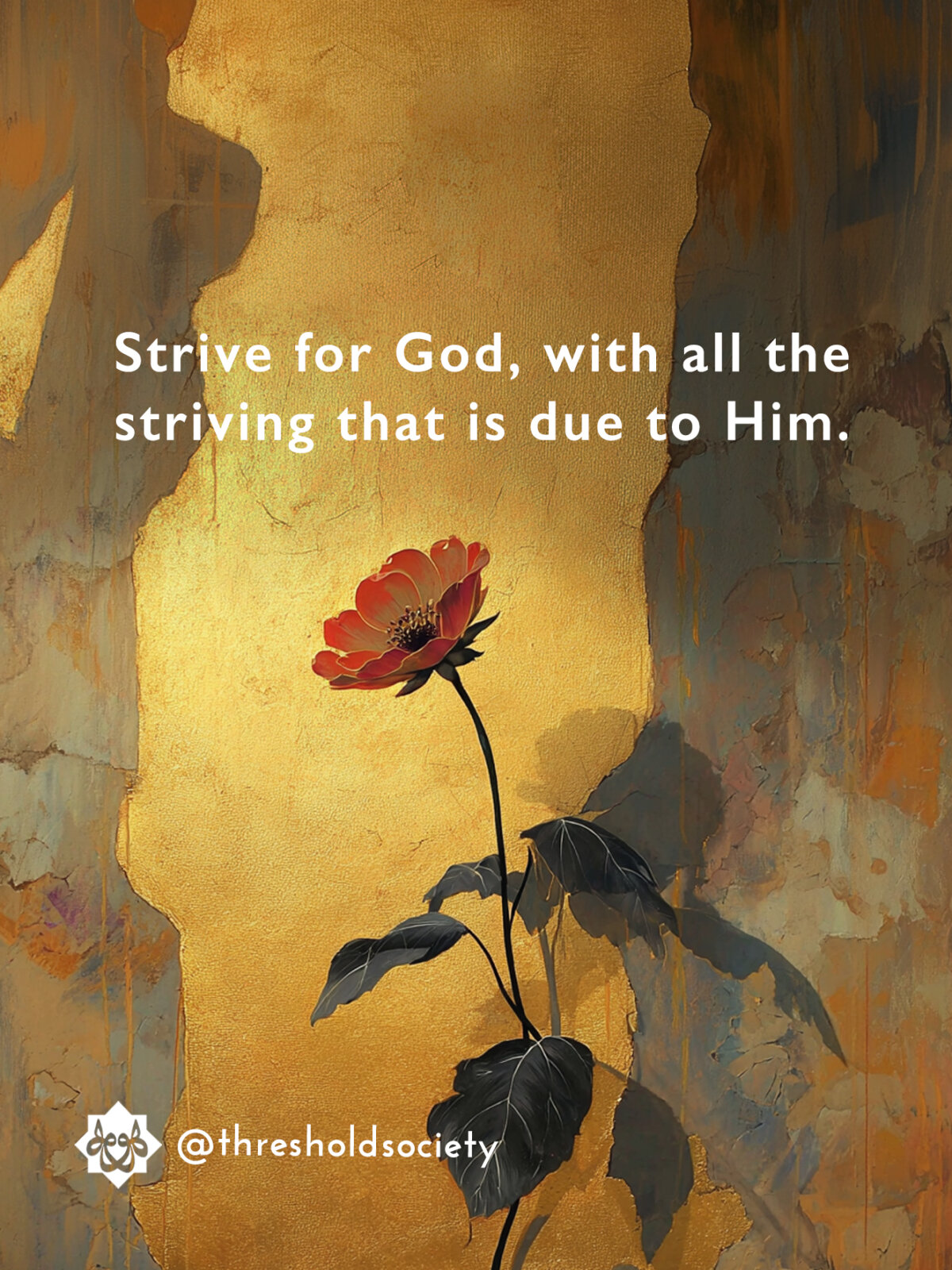
March theme: Strive for God, with all the striving that is due to Him.
~Quran, Surah Hajj, 22:78.
We welcome your reflections on this theme. |
| |
|
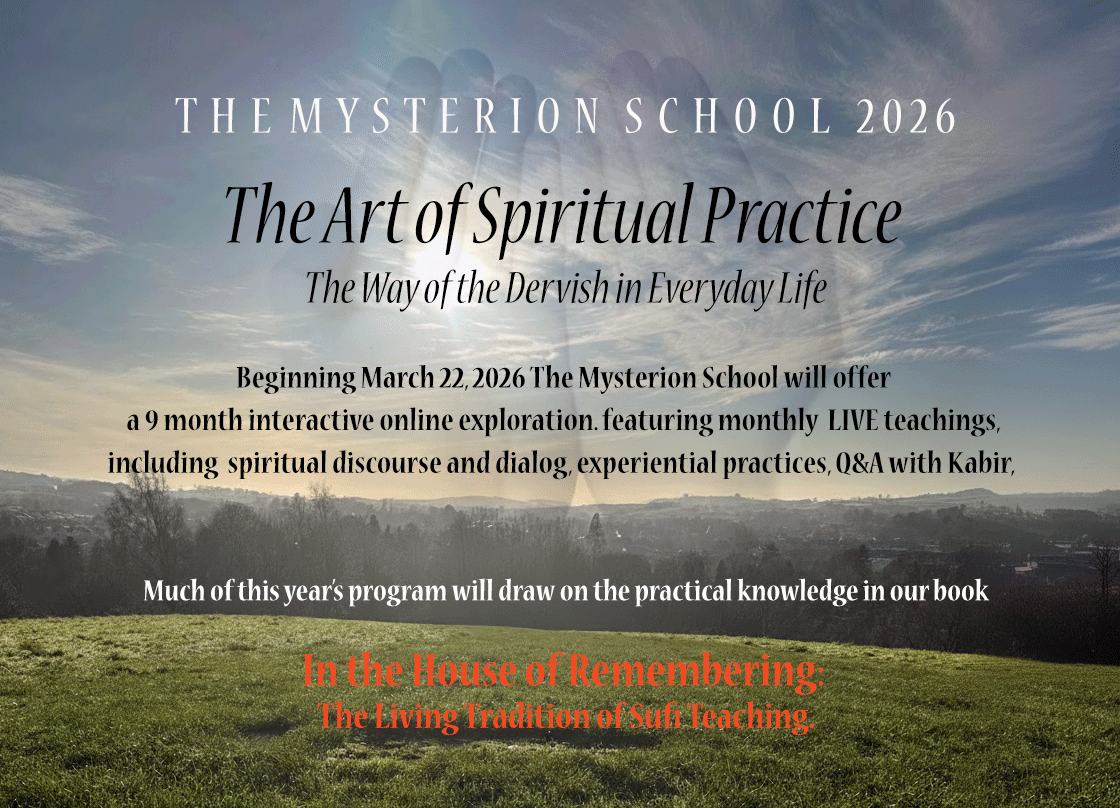
The Mysterion School 2026
|
| |
|
The Art of Spiritual Practice
The Way of the Dervish in Everyday Life
|
| |
|
Beginning Sunday, March 22nd, 2026. Nine live 90 minute sessions held on the third Sunday of each month at 9AM California and 5PM UK time, and 18 discussion sessions led by respected members of the Threshold community. All sessions will be permanently archived.
What we call “the way of the dervish” is a comprehensive life commitment, a vocation that encompasses all other vocations, allowing us to fulfill the purpose of life.
If you have been engaged in the first three years of this process, you have already been introduced to the knowledge supporting Sufi spiritual practice. This year we intend to experience more ways of applying this knowledge. If this will be your first year with us, welcome. Our work does not require specialized knowledge, nor even a background in Sufism. It is based in experience, not beliefs. Our aim is to awaken a capacity to see all of life as spiritual practice, to live in the reality of higher consciousness, with full awareness of divine support and love.
Much of this year’s program will draw on the practical knowledge in our book: In the House of Remembering: The Living Tradition of Sufi Teaching |
| |
|
A Four Minute Message from Kabir
about Mysterion 2026, The Art of Spiritual Practice. |
| |
|
San Damiano, US West Coast Retreat
March 27-29, 2026
|
| |
|
RUMI
A Mirror, A Compass, A Touchstone.
A retreat with Kabir & Camille Helminski, & Amir Etemadzadeh, master of Sufi music
March 27-29, 2026, San Damiano Retreat, Danville, California
Join us for a contemporary experience of sacred space, beauty, and friendship in beautiful countryside with precious community!
Please note: This retreat is now fully booked. A waitlist is available. |
| |
|
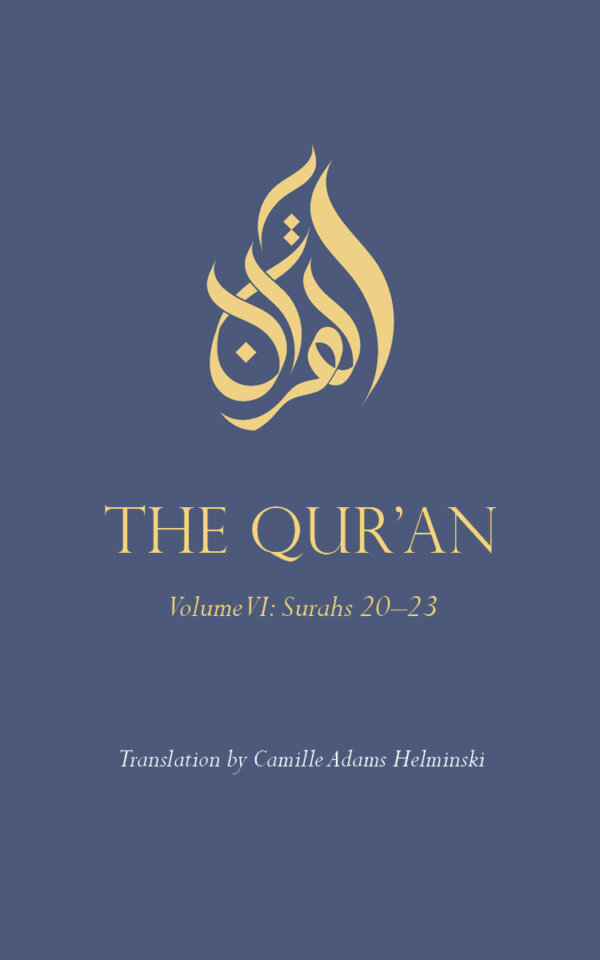
The Qur'an: Volume VI
English translation by Camille Adams Helminski |
| |
|
This Volume VI of the Qur’an, which contains Surah TaHa, Surah al-Hajj (“the Pilgrimage”), Surah al-Anbiya (“the Prophets”), and Surah al-Mu’minun (“the Faithful”), offers moments of strong support and clarification of our purpose, continued guidance as to how to realign with the Source of our being. |
| |
|
And I unfurled upon you Love from Me [wa alqaytu ‘alayka mahabbatan minnee]—so that you might be brought up under My Eye (in touch with the spring of My Love).
For I have brought you up for (service and intimacy with) My Self. [Wa astan‘atuka li-Nafsi.] Go forth, you and your brother, with My Communications [bi Ayaati], and never let go of remembering Me [wa la taniya fi zhikri]. Go to Pharaoh, both of you, for truly, he has transgressed (beyond the bounds of what is right). But speak gently to him, so that perhaps he might remember, or come into awe.
For one who comes to Hu as a faithful person, having done deeds of wholeness and reconciliation—for them are exalted stations, Gardens of Eternal Bliss, beneath which running waters flow: they will dwell there—that shall be the recompense for all those who purify themselves.
[Surah Ta Ha, 20:39; 41-44; 75-76] |
| |
|
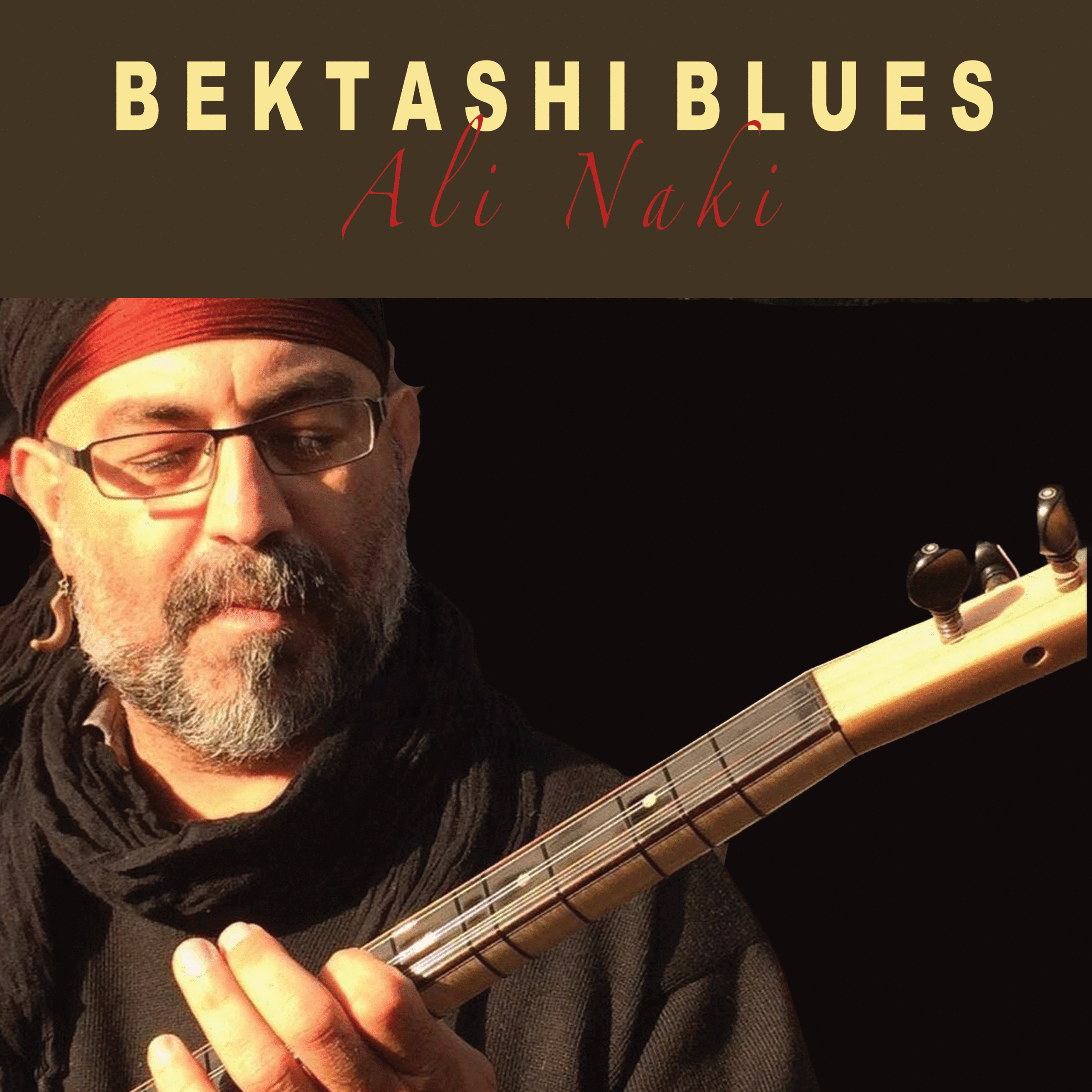
Ali Naki is a true Sufi troubadour, bringing the fragrance of Ashk (divine, spiritual love) to circles of seekers throughout Anatolia.
We met him first a few years ago when he appeared at a “meshk” (an evening of ilahis and whirling) we had organized near Fethiye during one of our Turkey trips.
This is his first album and we are honored to help bring him to an international audience. Hear him on all streaming services. |
| |
|
Download this PDF containing our translations of these deeply mystical songs. |
| |
|
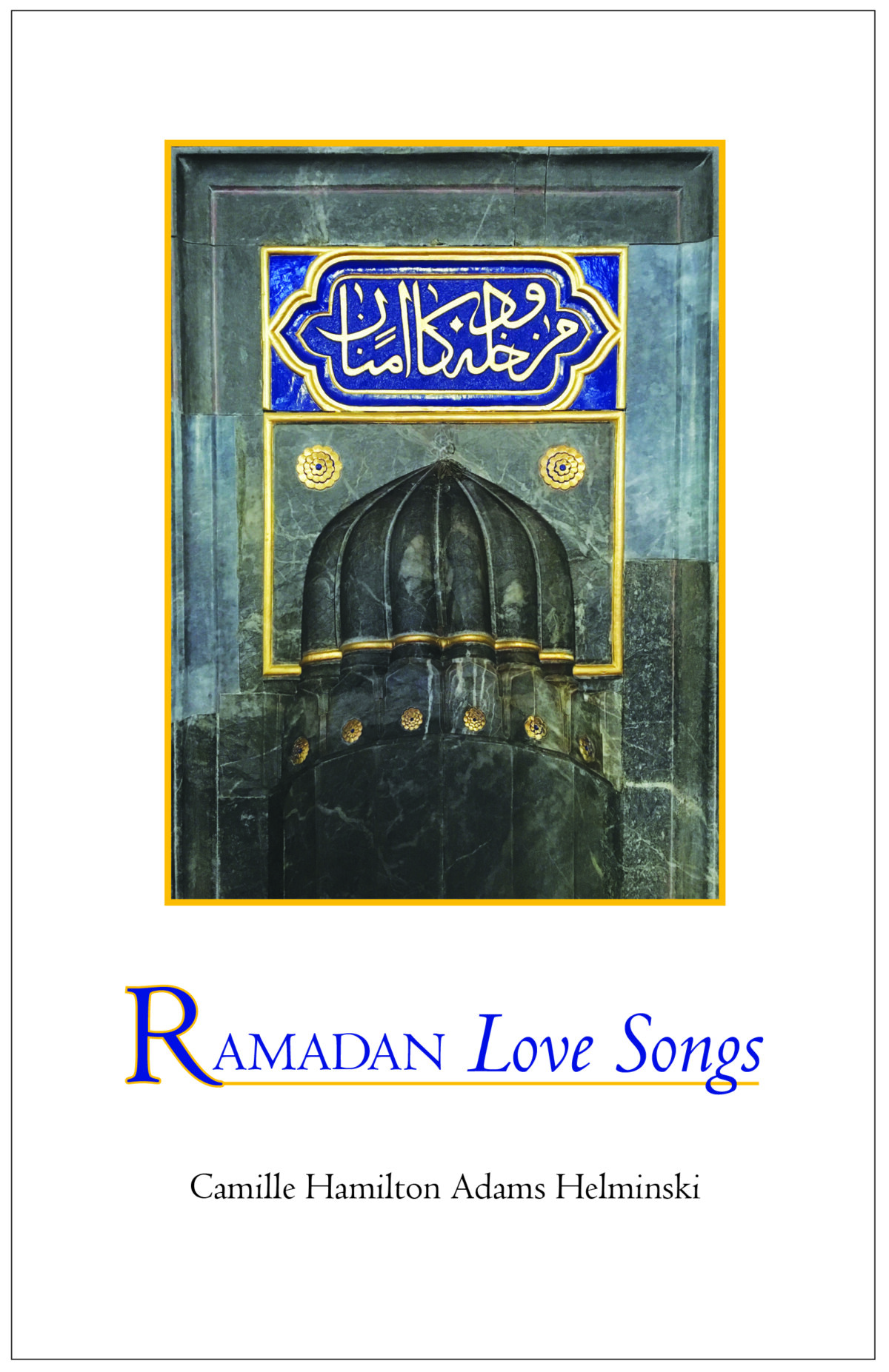
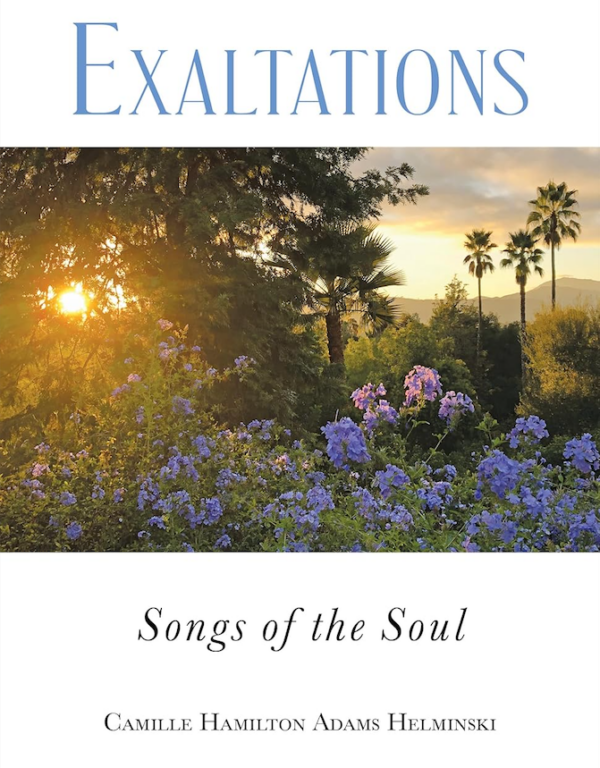
Through this second collection in the “Songs of the Soul” series, we encounter a world where Divine Grace is always with us and every moment is an opportunity to “begin again” in God’s Name. Whether amidst expansion or contraction, whether witnessing the intricacies of the human body or the canopy of the stars, Camille Hamilton Adams Helminski draws our attention to something subtle yet intoxicating with Its Beauty. Her clarity of vision, as well as her appreciation of the Mysterious, compels us to witness the workings of the Divine within our lives, with wonder, opening the heart to this Love, our very Life, the Source of our breath—this Force that pours through us and knows no boundaries!
“Ramadan Love Songs remind us to turn always to the light of Divine Grace with an open heart. Nothing else allows us to see. Nothing else can seek the companionship of the Most High, Who is always present. These poems for Ramadan—and every month of the year—grant us a sublime scent of a fragrance that inundates us with their power and subtlety. Glory be to one who wrote them and to the One she reminds us to remember.”
~ Amina Wadud, professor emeritus (Visiting Scholar Starr King School for the Ministry, Berkeley, CA. Author of Qur’an and Woman)
“With Ramadan Love Songs, Camille Helminski has given a precious gift to all who walk the Path of Love. These purifying words of depth and devotion can hold us gently and guide us firmly through sacred passages, that lead us all towards the One.”
~ Rabbi Shefa Gold (Author of Are We There Yet? Travel as a Spiritual Practice)
“The tradition of Ramadan poetry in English goes back to the late Daniel Abdal-Hayy Moore, and is now extended by the lovely new work of Camille Helminski. Growing out of a mingling of the Qur’an, devotion to the Prophet, and Rumi’s poetry, these poems will touch your heart. These poems begin with the story of the washing of the blessed Prophet’s heart, and, God-willing, they will do the same for yours.”
~ Omid Safi (Professor of Islamic Studies, Duke University. Author, Radical Love: Teachings from the Islamic Mystical Tradition) |
| |
|
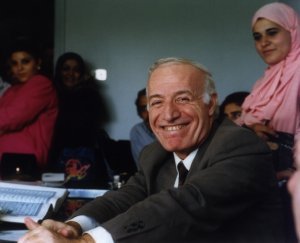
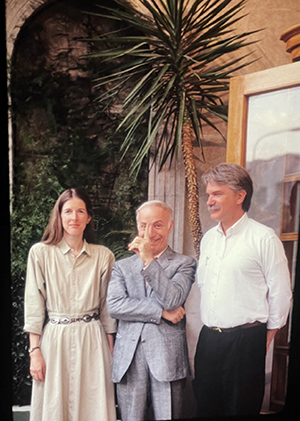
On February 6 we received word that our beloved mentor, guide, and inspiration, Dr. Asad Ali had passed away. This spiritual friendship began in 1989 when, by an extraordinary set of circumstances, Camille and I were invited to travel to Damascus to meet this great friend of God, scholar, and literary figure. |
| |
|
The Seven Rivers of Damascus
|
| |
|
I remember vividly my first impression of Asad Ali as he opened the door of his home. This “Arab ascetic” was dressed in a stylish white suit and greeted us with a broad smile and a flamboyant “Salaam! Salaam!” We were about to enter a new world of cultivated meaning, high conversation, and spiritual refinement. It is said that the high art of the Arab is rhetoric, and in Damascus, we witnessed a love of language and mystical discourse greater than anything we had so far experienced.
[Read more. . .] |
| |
|
Coleman Barks of Athens, GA passed peacefully at home on February 23, 2026 surrounded by loved ones. In 1980, Coleman sent us a large amount of his versions of Rumi, which we sorted through, chose some of the best, and created the book Open Secret, which was destined to become one of the best-selling books of poetry of the 20th century. Threshold published three more volumes of his Rumi versions. Selections from these four books were eventually collected in The Essential Rumi.
He was born on April 23, 1937 and grew up on the campus of Baylor School along the Tennessee River in Chattanooga, where his father was headmaster. He attended Baylor School and was a stellar athlete who excelled at soccer and tennis. He earned his BA at UNC Chapel Hill as the first out-of-state Morehead Scholar, and his MA at the University of California, Berkeley, returning to UNC for his doctorate. Barks joined the faculty of the University of Georgia English Department in 1967, where he taught literature and creative writing to thousands of students until his retirement as professor emeritus in 1997. |
| |
|
Presence, Stillness and Fasting
|
| |
|
Spiritual conversation (sohbet) with Shaikh Kabir and Camille Helminski on 6/14/18.
“Fasting brings an experience of stillness and quiet that is very different from what we normally experience in everyday life. It deepens that experience of presence and stillness. So, you become something different in that state. Even if you were, relatively, in a state of presence without fasting, with fasting there is (not all the time but some of the time) an experience of undisturbed spaciousness. Do you know what I’m talking about? Has anybody experienced this? Otherwise, you have experienced only hunger.
The hunger and thirst of Ramadan is not a big deal. It’s not difficult. There’s nothing difficult about it. What’s difficult is what is going on up here [pointing to the head]. What’s difficult is what you think about it—when you think, “Oh, my God, 12 more hours of this!” or, “Oh, my God, 24 more days of this, how can I do it?” That’s where the suffering is. Maybe an occasional moment of a little bit of pain, or maybe a little bit of nausea for a moment. It’s nothing really. But what the brain does, what the mind does, that’s where the suffering is. So, in some remarkable way, this process of meditation of the body, which is fasting, allows us to experience a degree of stillness, of quiet, of undisturbedness, and of a deep relaxation of the body and the mind.
Sometimes for various reasons, including medical reasons, a 30-day fast may not be what your body needs. Though, in general, fasting is really good for the body, and, in general, it’s a letting go of toxins. There’s a Spring cleaning of the organism. Even as much as is possible is good. As a matter of principle, we don’t do a lot to, shall we say, urge you, even toward the good and beneficial. Why? Because I don’t want the initiative, the impetus, the stimulus for that to be coming externally. I don’t want you to be doing it because your shaikh is saying, “You must do this; you must do that.” You’ll notice there is very little of that here. But occasionally we do bring our attention to the truth of the matter and are reminded of the beauties of the path. Otherwise, you need to find it for yourself. You search and see what the Prophet and Imam Ali have said about this. One thing is that Ramadan is about sincerity. It’s also a shield against hellfire. I don’t like to use that language. What does it mean, “It’s a shield against hellfire?” Hellfire is your nafs. So, we’ve come through it however we have come through it, it’s finishing joyfully. Set your intention for next year or for next Thursday. Fasting on Monday and Thursday is highly recommended. But, the purpose, the benefit is the state that it brings you to, the experience of your own self, of your own being that it opens up, and you will find in that state so much changes, the world looks different.
By the way, Imam Ali says, and the Prophet Mohammed, peace and blessings upon him, says, “Never eat until you are full, never fill yourself up, especially during Ramadan. One of our brothers during Ramadan fasted on the first 20 days and on the last 10 days reduced his intake just to liquids and in that state went walking with his son to the park and noticed the trees on the path and the trees giving shade and he wept. His heart opened up at the trees providing shade. This is the human state. This is the state we could be in. All we have is our state. Otherwise, we have thoughts, drives, emotional conflicts, frustrations, complaints and that’s just “stuff.” And you’re not that “stuff.” You deserve better.
So, in conclusion, all the human being ever has is your state, and that state is developed, that state is—in fact you make a distinction between state and station—I’m using state to mean both. State usually refers to passing experience like weeping at the trees providing shade, that’s the hal, but maqam is your state of being. And if you can be in a maqam of presence, more and more the quality of life changes. There will be Intelligence and Guidance available to you. It is enhanced. A sense of meaning and purpose is enhanced. So, fasting helps that. You can fast almost any day of the year. There are few days that you’re not supposed to fast. It’s just that in Ramadan it is a lot easier because there’s a momentum, there’s a supportive energy and there’s community and its solidarity. So, alhamdulillah, alhamdulillah, alhamdulillah! Eid is coming.” |
| |
|
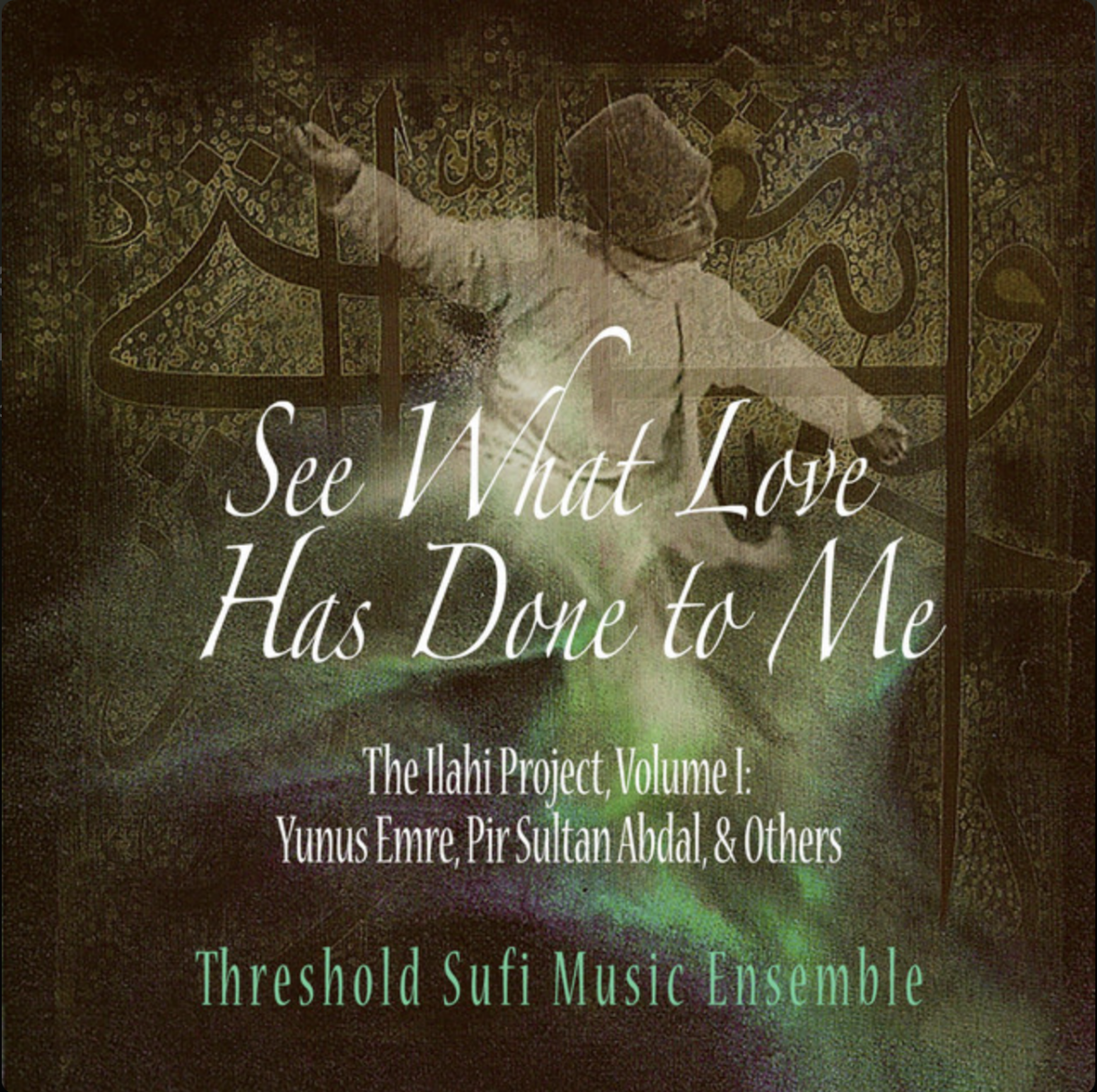
See What Love Has Done to Me:
An Album from Threshold Sufi Music Ensemble.
|
| |
|
We are happy to offer The Threshold Sufi Music Ensemble and The Ilahi Project. This album, "See What Love Has Done to Me," recorded this past June in Istanbul under the direction of Shaikh Kabir and Selçuk Gürez, celebrates the living tradition of Sufi “tekke” music. |
| |
|
You can also view and download the companion booklet, below, which includes the full Turkish texts and English translations of all the ilahis. |
| |
These poems act as an open window
through which we catch the fragrance of the Divine Beloved,
whose Presence is everywhere and vibrating through all that is.
|
| |
These moments of Exaltation, of witnessing the Creative Power and Beauty,
invite us to partake of a spiritual banquet that is continually being provided from the Unseen, pouring into this visible realm,
offering support for each of us in our realignment with our Source.
We are reminded that we have been given
hearts to perceive, eyes to see, and ears to hear
the intimate songs of the Beloved resonating everywhere.
Available from:
|
| |
|
March 1st
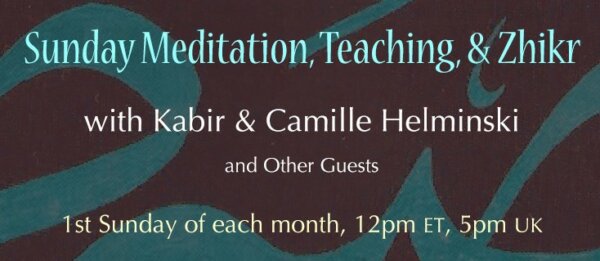
Join us for a monthly online meditation and sohbet with Shaikh Kabir and special guests from the Threshold community. Held on the 1st Sunday of every month at 12pm Eastern Time (5pm UK).
Zoom meeting: https://zoom.us/j/435138208
Zoom passcode: threshold
Watch last month's meeting below and see all our videos here.
To view in YouTube without interrupting ads, use the Brave browser. |
| |
|
The Threshold Society, rooted within the traditions of Sufism and inspired by the life and work of Mevlâna Jalâluddîn Rumi, is a non-profit educational foundation with the purpose of facilitating the experience of Divine Unity, Love, and Truth in the world. Sufism is a living tradition of human transformation through love and higher consciousness. Our fundamental framework is classical Sufism and the Qur’an as it has been understood over the centuries by the great Sufis. The Society is affiliated with the Mevlevi Order, and offers training programs, seminars and retreats around the world.
You can find our core articles here. We encourage our community to read and reread these regularly.
Each month we intend to highlight an article about our lineage and its principles. This month we offer the Threshold Glossary
Definition of a definition: Some of the following definitions are offered for linguistic consistency and clarity; some of these also carry a teaching. For example, the definition of a “dervish”: one who stands at the threshold between slavery and freedom. “A definition has to cover all kindred aspects of what is being defined, and should be free from all aspects that don’t agree with it” (Hasan Tahsin Baba).
Abundant life: Living life fully and being consciously aware of becoming whole with your mind, body, soul, and ecology.
Adab: Spiritual courtesy. This refined and conscious form of spiritual courtesy helps to create an atmosphere of respect and affection which supports the process of transformation. It is one of the most important practices of the Sufi path.
Appropriateness: The child of love and humbleness.
Ashk (Turkish)/eshq (Farsi): In Sufi usage, deep spiritual love.
[Read more...] |
| |
1st Sunday of every month: Online Meditation, more details.
Mar 27-29: San Damiano, California. Registration now open.
Friday evening August 14 through Monday noon August 17: 2026 UK Annual Retreat, more details soon. |
| |
Threshold Society
PO Box 45143, Madison, WI 53744-5143
© Threshold Society. All rights reserved.
| |
|